





Now Reading: Easy Chicken Alfredo
-
01
Easy Chicken Alfredo

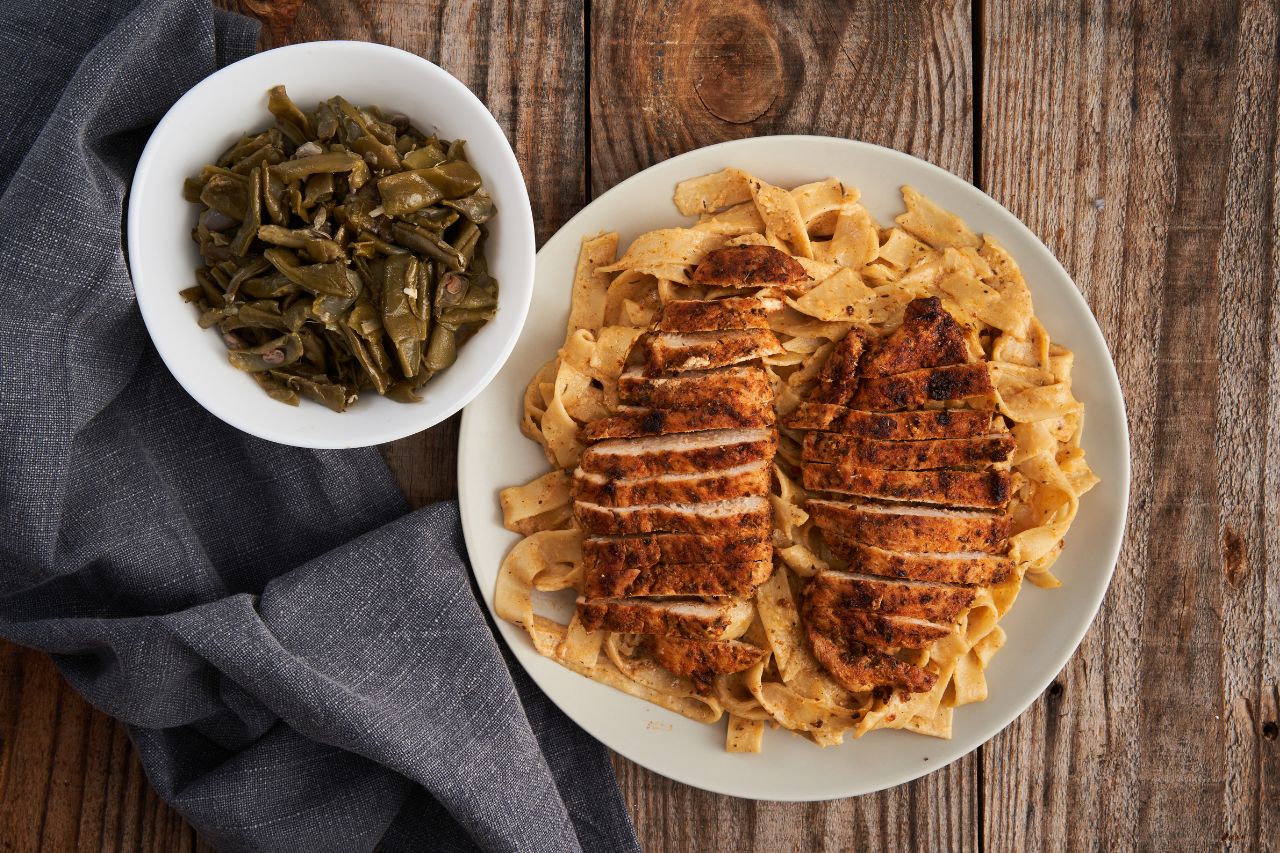
Chicken Alfredo is the kind of creamy pasta dinner that feels comforting from the first bite. Tender pieces of seasoned chicken are combined with fettuccine and coated in a smooth Alfredo sauce made with butter, garlic, heavy cream, and Parmesan cheese.
The whole dish comes together without complicated techniques, making it a practical choice for a family dinner or an easy weekend meal. The key is to cook the chicken until golden, keep the Alfredo sauce at a gentle heat, and use freshly grated Parmesan for the smoothest finish.
Recipe at a Glance
- Prep Time: 15 minutes
- Cook Time: 25 minutes
- Total Time: About 40 minutes
- Servings: 4
- Pasta: Fettuccine
- Best For: Weeknight dinners and family meals
Ingredients
For the Chicken
- 1 1/2 pounds boneless, skinless chicken breasts
- 1 teaspoon Italian seasoning
- 1/2 teaspoon garlic powder
- 1/2 teaspoon salt
- 1/4 teaspoon black pepper
- 1 tablespoon olive oil
- 1 tablespoon unsalted butter
For the Alfredo Pasta
- 12 ounces fettuccine
- 2 tablespoons unsalted butter
- 3 cloves garlic, minced
- 1 1/2 cups heavy cream
- 1 cup freshly grated Parmesan cheese
- 1/2 teaspoon Italian seasoning
- 1/4 teaspoon black pepper
- 1/2 cup reserved pasta water
- Salt, to taste
For Serving
- Extra grated Parmesan
- Fresh parsley, chopped
- Freshly ground black pepper
How to Make Chicken Alfredo
1. Prepare the Chicken
Pat the chicken breasts dry with paper towels.
Season both sides with Italian seasoning, garlic powder, salt, and black pepper.
If the chicken breasts are very thick, gently pound them to an even thickness. This helps them cook more evenly.
2. Cook the Chicken
Heat the olive oil and butter in a large skillet over medium heat.
Add the seasoned chicken and cook for about 5–7 minutes per side, depending on thickness, until golden brown and fully cooked.
The internal temperature should reach 165°F (74°C).
Transfer the chicken to a plate and let it rest for about 5 minutes before slicing.
3. Cook the Fettuccine
While the chicken cooks, bring a large pot of salted water to a boil.
Add the fettuccine and cook according to the package directions until al dente.
Before draining, reserve about 1/2 cup of pasta water.
Drain the pasta and set it aside.
4. Start the Alfredo Sauce
Using the same skillet, melt the butter over medium-low heat.
Add the minced garlic and cook for about 30–60 seconds, just until fragrant.
Be careful not to brown the garlic.
5. Add the Cream
Pour the heavy cream into the skillet.
Add the Italian seasoning and black pepper.
Bring the mixture to a gentle simmer and cook for about 3–4 minutes, stirring occasionally.
Do not let the cream boil aggressively.
6. Add the Parmesan
Reduce the heat to low.
Gradually add the freshly grated Parmesan while stirring continuously.
Continue stirring until the cheese melts into the cream and creates a smooth Alfredo sauce.
If the sauce becomes too thick, add a small splash of reserved pasta water.
7. Add the Pasta
Place the cooked fettuccine directly into the Alfredo sauce.
Toss gently until the pasta is evenly coated.
Add more pasta water a little at a time if needed. The finished sauce should be creamy enough to coat the noodles without becoming overly thick.
8. Slice the Chicken
Slice the rested chicken into thin strips or bite-size pieces.
Arrange the chicken over the creamy fettuccine or gently toss it through the pasta.
9. Serve
Divide the Chicken Alfredo between plates.
Top with extra Parmesan, fresh parsley, and freshly ground black pepper.
Serve immediately while the sauce is warm and silky.
What Makes a Good Chicken Alfredo?
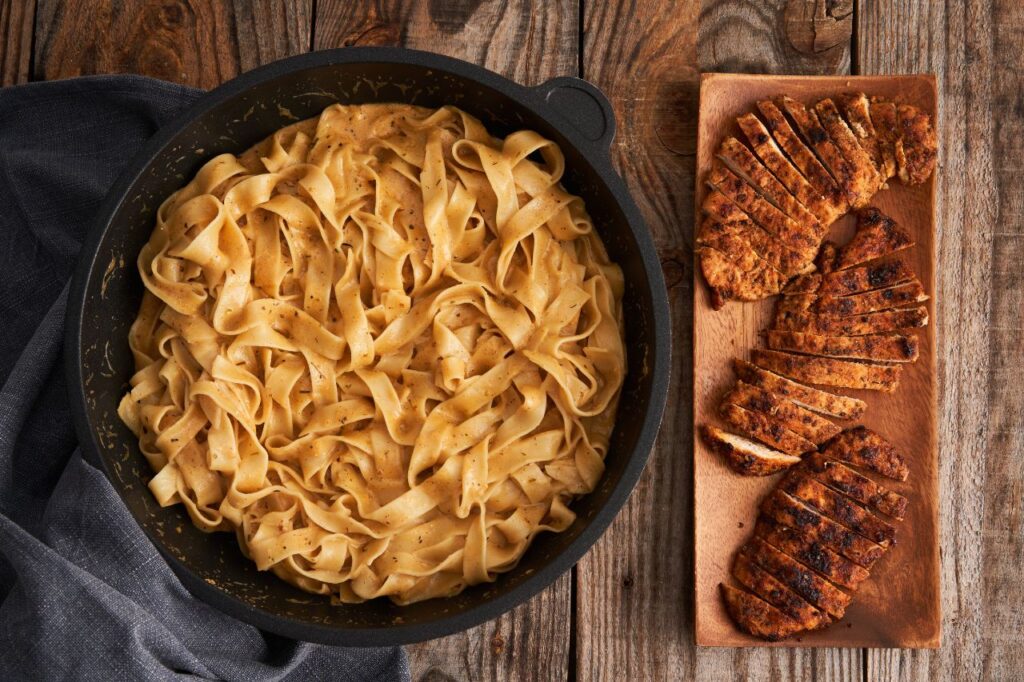
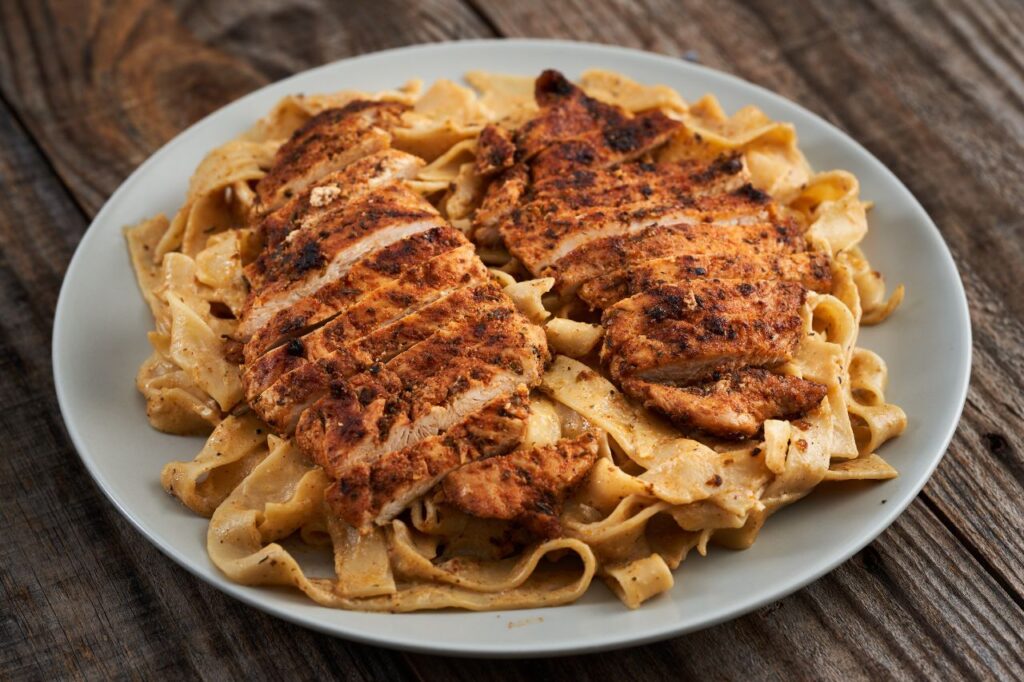
A good Chicken Alfredo has three important components: juicy chicken, properly cooked pasta, and a smooth Parmesan sauce.
The chicken should be golden on the outside without becoming dry. The pasta should remain slightly firm, while the Alfredo sauce should be creamy enough to coat every strand.
Using freshly grated Parmesan and gentle heat makes a noticeable difference in the final texture.
Ingredient Notes
Chicken breasts: Boneless, skinless chicken breasts are easy to slice and cook quickly. Chicken thighs can also be used if you prefer darker meat.
Fettuccine: Its wide shape works especially well with creamy Alfredo sauce because it holds the sauce across the noodles.
Butter: Adds richness and provides the base for cooking the garlic and building the sauce.
Heavy cream: Creates the creamy foundation of the Alfredo sauce.
Parmesan: Provides the characteristic salty, nutty flavor and naturally thickens the sauce.
Garlic: Adds savory depth without overpowering the creamy sauce.
Pasta water: The starch in the water helps loosen the sauce and helps it cling to the fettuccine.
How Do You Make Chicken Alfredo Creamy?
The trick is to keep the sauce at a gentle temperature.
After adding the cream, don’t let it boil aggressively. Once you add Parmesan, lower the heat and stir continuously until the cheese melts.
Reserved pasta water can then be added gradually to adjust the consistency.
Why Is My Alfredo Sauce Too Thick?
Alfredo sauce naturally thickens as it cools and as the Parmesan melts.
If your sauce becomes too thick, add a tablespoon or two of reserved pasta water and toss the pasta until the sauce loosens.
You can repeat this until you reach the consistency you want.
Why Did My Alfredo Sauce Separate?
High heat is one of the most common reasons a creamy cheese sauce separates.
Keep the heat low when adding Parmesan and avoid boiling the sauce after the cheese has been added.
Freshly grated Parmesan also tends to incorporate more smoothly than pre-shredded cheese.
How Do You Keep Chicken Breast Moist?
Avoid overcooking the chicken.
Cooking the chicken to an internal temperature of 165°F (74°C) and allowing it to rest for several minutes before slicing helps retain its juices.
Pounding thick chicken breasts to an even thickness also helps them cook more evenly.
Easy Chicken Alfredo Variations
This recipe is easy to customize without changing the creamy base.
Try adding:
- Broccoli
- Spinach
- Mushrooms
- Sun-dried tomatoes
- Cooked bacon
- Shrimp
- Red pepper flakes
- Fresh basil
- Roasted bell peppers
For extra garlic flavor, add another clove or two when making the sauce.
What to Serve With Chicken Alfredo
Because Chicken Alfredo is rich and creamy, fresh or lightly cooked sides work especially well.
Serve it with:
- Garlic bread
- Caesar salad
- Green salad
- Steamed broccoli
- Roasted asparagus
- Green beans
- Roasted vegetables
Garlic bread is particularly useful for soaking up any Alfredo sauce left on the plate.
Can You Make Chicken Alfredo Ahead of Time?
Chicken Alfredo is best served immediately because the sauce thickens as it cools.
However, the chicken can be cooked ahead and refrigerated for up to 3 days.
You can also prepare the Alfredo sauce shortly before serving and gently reheat it while cooking fresh pasta.
How to Store Chicken Alfredo
Transfer leftovers to an airtight container and refrigerate for up to 3 days.
When reheating, place the pasta in a skillet over low heat and add a splash of milk, cream, or water.
Stir gently until the sauce becomes creamy again. Avoid high heat because it can cause the Parmesan sauce to separate.
Frequently Asked Questions
Can I use milk instead of heavy cream?
Yes, but the Alfredo sauce will be lighter and less rich. Whole milk gives better results than low-fat milk.
What pasta is best for Chicken Alfredo?
Fettuccine is the classic choice because the wide noodles hold the creamy sauce well. Linguine, spaghetti, and penne can also be used.
Can I use pre-shredded Parmesan?
You can, but freshly grated Parmesan generally melts more smoothly and creates a better sauce texture.
Can I make Chicken Alfredo without garlic?
Yes. Garlic is not essential to the basic Alfredo sauce, although it adds a pleasant savory flavor.
Can Chicken Alfredo be frozen?
It can be frozen, but creamy cheese sauces may change texture after thawing. For the best result, prepare fresh Alfredo when possible.
Related Posts

Stay Informed With the Latest & Most Important News
Previous Post
Next Post



Advertisement
