



Now Reading: Easy Fish and Chips Recipe – Crispy British-Style Fish
-
01
Easy Fish and Chips Recipe – Crispy British-Style Fish

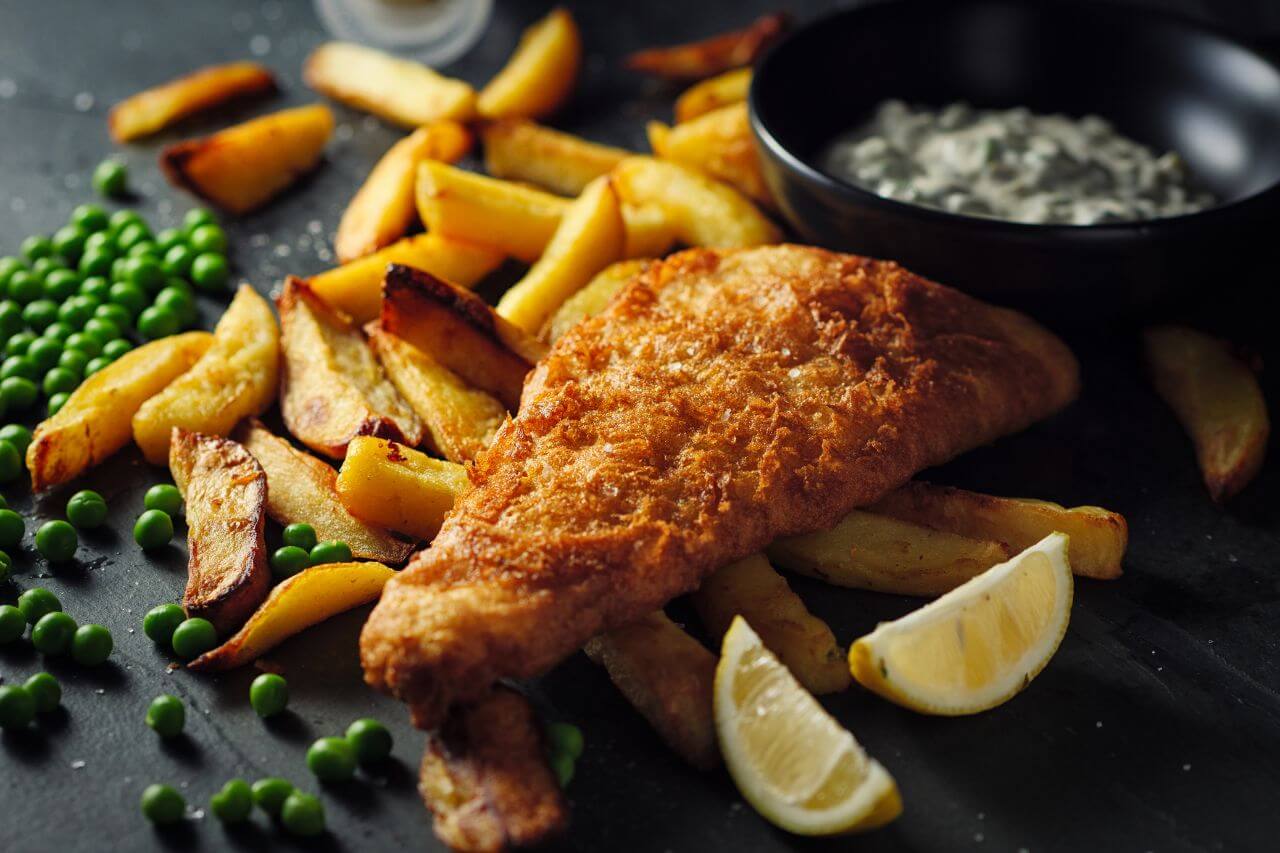
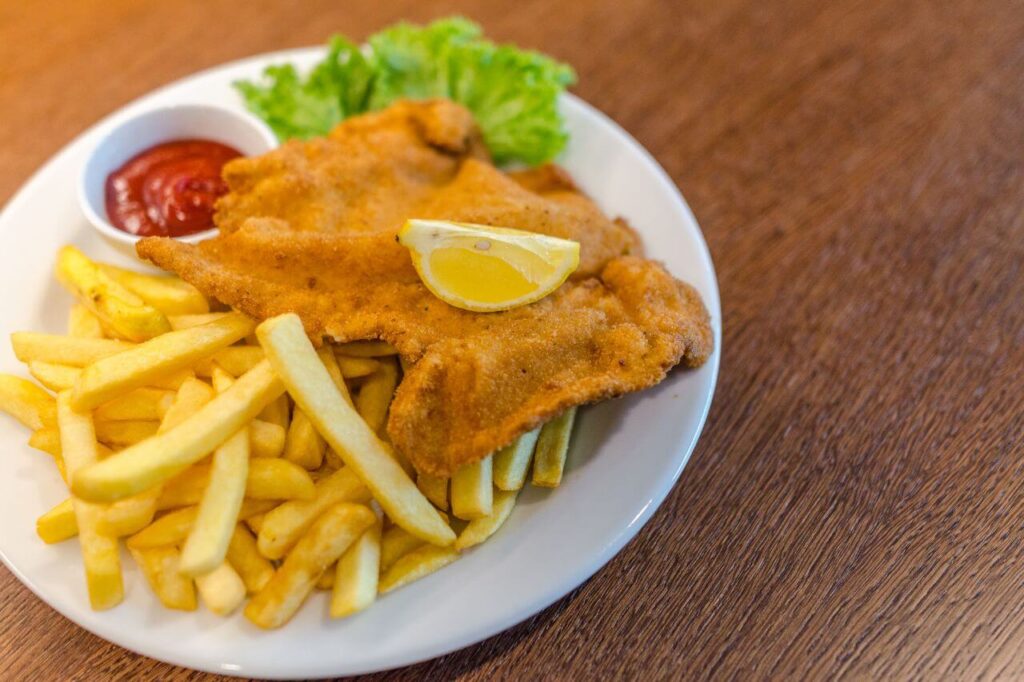
Fish and Chips is a classic British comfort food featuring flaky white fish covered in a light, crispy batter and served with golden homemade chips. When the batter hits hot oil, it puffs into a crunchy shell while the fish inside stays tender and moist.
This easy Fish and Chips recipe brings that takeaway-style combination into your kitchen with simple ingredients. Serve it hot with tartar sauce, lemon wedges, malt vinegar, or your favorite dipping sauce.
Fish and Chips Recipe at a Glance
- Prep Time: 20 minutes
- Cook Time: 25 minutes
- Total Time: 45 minutes
- Servings: 4
- Cuisine: British
- Main Ingredients: White fish and potatoes
- Best Served With: Tartar sauce, lemon, and malt vinegar
Ingredients
For the Fish
- 1 1/2 lb cod or other firm white fish fillets
- 1 cup all-purpose flour
- 1 tsp baking powder
- 1/2 tsp salt
- 1/4 tsp black pepper
- 1 cup cold sparkling water
- 1/2 cup all-purpose flour, for dredging
- Vegetable oil, for frying
For the Chips
- 4 large russet potatoes
- 1 tsp salt
- Vegetable oil, for frying
For Serving
- Lemon wedges
- Tartar sauce
- Malt vinegar
- Fresh parsley, optional
How to Make Fish and Chips
1. Prepare the Potatoes
Peel the potatoes and cut them into thick chips, roughly 1/2 inch thick.
Place them in a large bowl of cold water and let them soak for at least 20–30 minutes.
Soaking helps remove some surface starch, which encourages the potatoes to become crispier when fried.
Drain the potatoes thoroughly and pat them very dry with clean kitchen towels or paper towels.
2. Prepare the Fish
Pat the fish fillets completely dry.
Cut larger fillets into manageable portions.
Season lightly with salt and black pepper.
Keeping the fish dry is important because excess moisture can prevent the batter from sticking properly.
3. Make the Batter
In a large bowl, whisk together 1 cup flour, baking powder, salt, and black pepper.
Slowly pour in the cold sparkling water while whisking.
Mix just until the batter is smooth.
The batter should be thick enough to coat the fish but still flow easily from the surface.
Keep the batter cold while you prepare the oil.
4. First-Fry the Chips
Heat vegetable oil in a deep, heavy-bottomed pot or deep fryer to approximately 325°F (165°C).
Carefully add the dried potato chips in batches.
Fry for about 4–6 minutes, until they are softened and pale but not deeply browned.
Remove them from the oil and place them on a wire rack or paper towel-lined tray.
Repeat with the remaining potatoes.
5. Heat the Oil for the Fish
Increase the oil temperature to approximately 350°F (175°C).
Place the remaining flour in a shallow bowl.
Lightly dredge each fish fillet in flour, shaking off the excess.
Dip the floured fish into the cold batter and allow the excess batter to drip away.
6. Fry the Fish
Carefully lower the battered fish into the hot oil.
Fry for approximately 5–7 minutes, depending on the thickness of the fillets.
The coating should become deep golden brown and crisp, while the fish should be opaque and flaky in the center.
Transfer the fried fish to a wire rack.
Avoid stacking the pieces because trapped steam can soften the crispy batter.
7. Finish the Chips
Increase the oil temperature to approximately 375°F (190°C).
Return the partially cooked chips to the oil in batches.
Fry for another 3–5 minutes, until they are golden brown and crisp on the outside.
Transfer them to a wire rack and season immediately with salt.
8. Serve
Arrange the crispy fish and golden chips on serving plates.
Add lemon wedges and tartar sauce.
For a traditional-style finish, drizzle with malt vinegar or serve it alongside the meal.
Serve immediately while the fish is crisp and the chips are hot.
Why You’ll Love This Fish and Chips
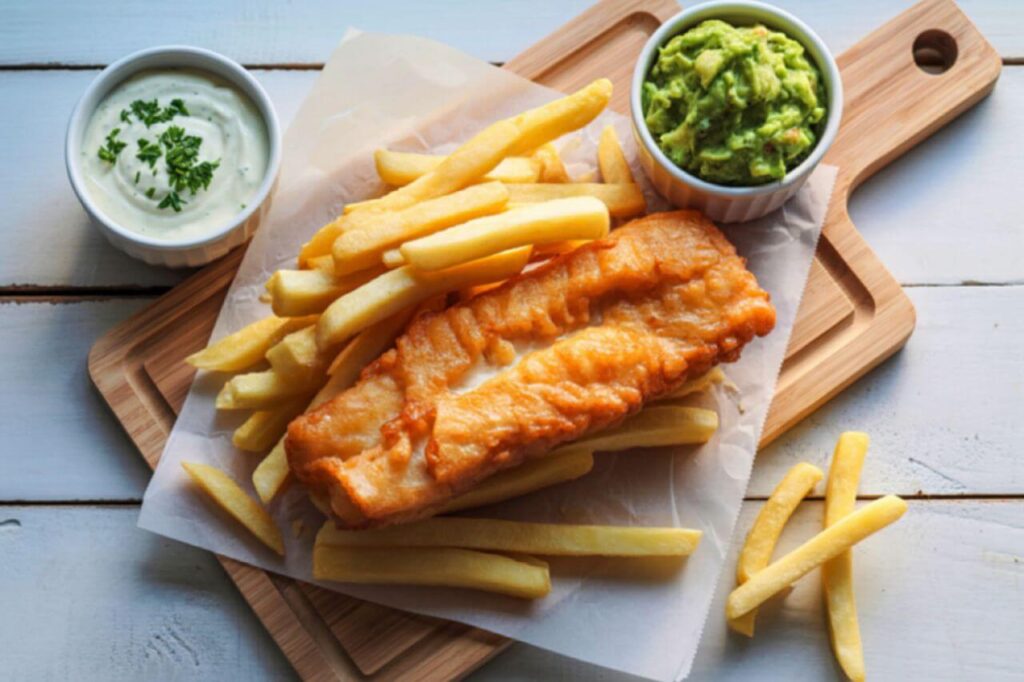
Fish and Chips is all about contrast: crisp batter surrounding tender fish and crunchy golden chips with fluffy centers.
The double-frying method gives the potatoes a crisp exterior without leaving the middle undercooked. Meanwhile, the cold sparkling-water batter creates a light coating around the fish.
It’s a comforting homemade dinner that works just as well for a casual family meal as it does for a weekend treat.
Ingredient Notes
Cod: Cod is a classic choice because its mild flavor and firm, flaky texture work well with a crispy batter. Haddock or another firm white fish can also be used.
Russet potatoes: Their high starch content makes them particularly suitable for crispy homemade chips.
Cold sparkling water: The carbonation helps create a lighter batter. Keep it cold until you’re ready to fry.
Baking powder: A small amount helps the batter puff slightly during frying.
Vegetable oil: Use an oil with a high smoke point and a neutral flavor, such as canola or sunflower oil.
How Do You Make Fish and Chips Crispy?
There are several small details that make a big difference.
First, keep the batter cold and the oil hot. Second, dry the fish thoroughly before dredging it in flour. Third, avoid overcrowding the pot because adding too much food at once can lower the oil temperature.
For the chips, soaking and double-frying helps create a crisp exterior and fluffy center.
Finally, place fried food on a wire rack rather than covering it. This allows steam to escape and helps preserve the crunch.
What Fish Is Best for Fish and Chips?
Cod is one of the most popular choices because it has a mild flavor and large, flaky pieces.
Haddock is another excellent option and has a slightly more pronounced flavor.
You can also use other firm white fish, as long as the fillets are thick enough to remain moist while the batter becomes golden and crisp.
Why Is My Fish Batter Soggy?
Soggy batter usually comes from oil that isn’t hot enough, overcrowding the pan, or allowing the cooked fish to sit in trapped steam.
Use a thermometer to maintain the frying temperature and cook the fish in batches.
After frying, place the fish on a wire rack instead of directly on a flat plate. The rack allows excess oil and steam to escape.
Can You Make Fish and Chips Ahead of Time?
Fish and Chips is best served immediately.
However, you can prepare the potatoes ahead of time by cutting and soaking them. Drain and dry them thoroughly before frying.
The batter should also be mixed shortly before frying so it stays light.
If you have leftovers, reheat them in a hot oven or air fryer rather than the microwave to help restore some crispness.
Fish and Chips Variations
Beer-battered fish: Replace the sparkling water with cold beer for a classic beer-battered version.
Spicy fish and chips: Add paprika, cayenne, or chili powder to the flour mixture.
Garlic chips: Toss the finished chips with minced parsley and a small amount of garlic.
Haddock and chips: Replace the cod with haddock for a slightly richer fish flavor.
Oven-baked chips: Bake the potato chips with oil at high heat if you prefer not to deep-fry them.
What to Serve With Fish and Chips
Fish and Chips is traditionally served with simple accompaniments. Try it with:
- Tartar sauce
- Lemon wedges
- Malt vinegar
- Mushy peas
- Coleslaw
- Pickled onions
- Fresh green salad
- Curry sauce
How to Store Leftover Fish and Chips
Store leftover fish and chips separately in airtight containers in the refrigerator.
Use within 2–3 days.
For better texture, reheat the fish and chips in an oven or air fryer until hot and crisp. Avoid sealing them while they are still hot because trapped steam will soften the coating.
Frequently Asked Questions
What type of fish is used for Fish and Chips?
Cod and haddock are two popular choices. Both have firm, flaky flesh and mild flavors that work well with crispy batter.
Why do you soak potatoes before making chips?
Soaking helps remove excess surface starch. This can help the potatoes develop a crispier exterior during frying.
Can I use regular water instead of sparkling water?
Yes, but sparkling water can help produce a lighter, crispier batter.
Do I need to fry the chips twice?
Double-frying gives the chips a particularly crisp exterior and fluffy center. It is one of the easiest ways to improve homemade chips.
Can I make Fish and Chips without deep frying?
Yes. The fish and chips can be oven-baked or prepared in an air fryer, although the texture will differ from traditional deep-fried Fish and Chips.
How do I know when the fish is cooked?
The fish should be opaque and flake easily with a fork. For food safety, fish should reach an internal temperature of 145°F (63°C).
Final Thoughts
This easy Fish and Chips recipe brings together everything you want from a classic British-style meal: crisp golden batter, tender flaky fish, and perfectly fried chips with fluffy centers.
For the best results, keep the batter cold, maintain the correct oil temperature, fry in batches, and let the cooked fish drain on a wire rack. Finish with lemon, tartar sauce, and malt vinegar for a satisfying homemade meal.
Related Posts
Stay Informed With the Latest & Most Important News
Previous Post
Next Post



Advertisement
