


Now Reading: Vegan Peanut Butter Cookies
-
01
Vegan Peanut Butter Cookies

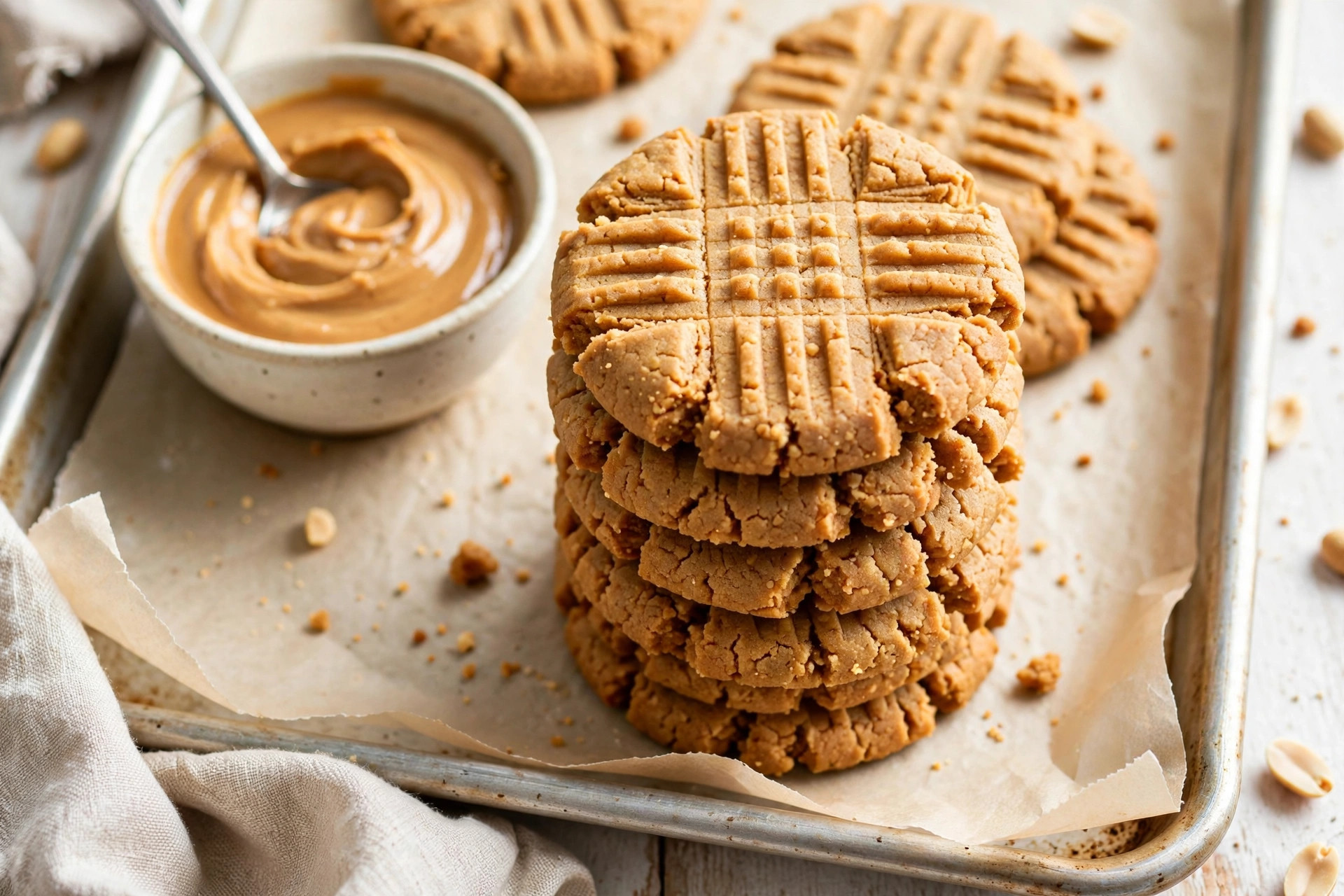
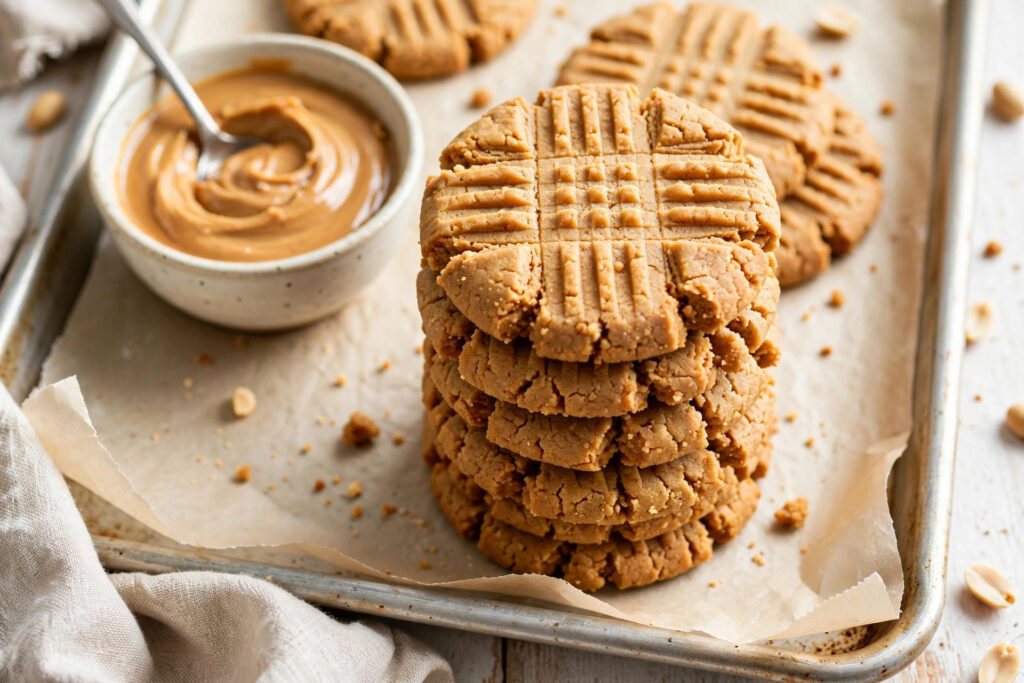
These vegan peanut butter cookies are soft in the middle, crisp at the edges, and finished with the classic fork crisscross on top. The dough mixes in one bowl with a spoon, with no mixer and no chilling time.
Peanut butter replaces both the butter and the eggs in this recipe, so the ingredient list stays at nine pantry staples. If you are building a vegan dessert tray, our vegan chocolate mousse makes a rich partner for a plate of these cookies.
Quick Recipe Overview
Prep Time: 15 minutes
Bake Time: 10 to 12 minutes
Cooling Time: 10 minutes
Total Time: About 30 minutes
Servings: 24 cookies
Oven Temperature: 350°F (175°C)
Equipment: One large bowl, a fork, and a baking tray
Quick Ingredients: creamy peanut butter, brown sugar, granulated sugar, oat milk, vanilla extract, all purpose flour, baking soda, salt.
Quick Steps: Stir the peanut butter, both sugars, oat milk, and vanilla into a smooth paste. Stir in the flour, baking soda, and salt to form a soft dough. Roll into balls, press a crisscross with a fork dipped in sugar, bake, and cool on the tray.
Ingredients for Vegan Peanut Butter Cookies
- 1 cup creamy peanut butter
- 3/4 cup brown sugar, packed
- 1/4 cup granulated sugar, plus extra for pressing the fork
- 6 tablespoons oat milk
- 2 teaspoons vanilla extract
- 1 cup all purpose flour
- 1 teaspoon baking soda
- 1/4 teaspoon salt
How to Make Vegan Peanut Butter Cookies
Step 1: Heat the Oven and Prepare the Tray
Heat the oven to 350°F (175°C). Line a large baking tray with parchment paper. The cookies spread a little as they bake, and the parchment keeps the sugary bottoms from sticking.
Step 2: Mix the Peanut Butter Base
Add the peanut butter, brown sugar, granulated sugar, oat milk, and vanilla to a large bowl. Stir with a sturdy spoon until the mixture looks smooth and glossy, with no streaks of dry sugar left. This paste is the whole base of the dough, so take a full minute here.
Step 3: Add the Dry Ingredients
Sprinkle the flour, baking soda, and salt over the top. Stir until a soft dough forms and no dry flour remains at the bottom of the bowl. The dough should feel pliable and slightly tacky, firm enough to roll without sticking to your palms. If it feels wet, stir in one extra tablespoon of flour.
Step 4: Roll and Press the Crisscross
Roll the dough into balls of 1 tablespoon each and set them on the tray about 2 inches apart. Dip a fork in granulated sugar and press each ball down once, then again at a right angle to make the crisscross pattern. The sugar stops the fork from sticking and gives the tops a light sparkle.
Step 5: Bake
Bake for 10 to 12 minutes, until the edges look set and the tops show fine cracks. The centers will look pale and slightly underdone, and that is correct. These cookies finish setting as they cool, and baking them longer dries them out.
Step 6: Cool on the Tray
Leave the cookies on the hot tray for a full 10 minutes. Without eggs to bind them, they are fragile straight from the oven and firm up as they cool. After 10 minutes, move them to a rack to cool the rest of the way.
Why These Vegan Peanut Butter Cookies Work
Peanut butter carries three jobs in this dough. Its fat replaces butter, its protein gives the crumb structure, and its natural thickness binds the dough the way eggs would. The oat milk loosens that dense paste just enough to stir in the flour without making the dough wet.
Brown sugar keeps the centers soft because it holds moisture better than granulated sugar alone. The small amount of granulated sugar works the other way, helping the edges set crisp and giving the fork its grip for the crisscross. Baking soda provides the lift and encourages the fine cracks across the tops.
Ingredient Notes
Peanut butter. Use a standard creamy peanut butter that stays mixed in the jar. Natural peanut butter that separates can work, but stir the jar very well first and expect a slightly drier dough. If the dough cracks when you roll it, stir in one more tablespoon of oat milk.
Oat milk. Oat milk has a neutral flavor and enough body for this dough. Soy milk works the same way. Thin almond milk also works, though the dough may need one extra tablespoon of flour to roll cleanly.
Brown sugar. Pack it firmly into the cup so the measurement is right. Light and dark brown sugar both work. Dark brown sugar gives a deeper molasses flavor and a slightly darker cookie.
Flour. Spoon the flour into the cup and level it off rather than scooping from the bag. Scooping packs in extra flour, and extra flour is the main reason these cookies bake up dry and crumbly instead of soft.
Tips for Soft Centers and Crisp Edges
- Measure the dough balls with a tablespoon so every cookie bakes at the same rate.
- Pull the tray at 12 minutes at the latest, even if the centers still look soft.
- Roll the balls smooth with no cracks, because cracks in the raw dough become wide splits in the baked cookie.
- Bake one tray at a time in the center of the oven for the most even edges.
- Press the fork only until the ball is about 1/2 inch thick. Thinner cookies lose their soft centers.
For another vegan bake built on pantry staples, our vegan carrot cake uses the same one bowl logic at layer cake scale, with a vegan cream cheese frosting on top.
Storage and Freezing
Store the vegan peanut butter cookies in an airtight container at room temperature for up to 4 days. A slice of bread in the container keeps them soft, since the cookies trade moisture with the bread as they sit.
Baked cookies freeze well for up to 3 months. Freeze them in a single layer first, then move them into a freezer bag. Thaw at room temperature for 20 minutes, or warm them in a 300°F oven for 4 to 5 minutes. Raw dough balls also freeze for up to 3 months and bake from frozen with 1 to 2 extra minutes. For safe storage times on all leftovers, follow the USDA leftovers and food safety guidelines.
Frequently Asked Questions
Can I use crunchy peanut butter in these cookies?
Yes. Crunchy peanut butter works with no other changes, and the peanut pieces add texture to every bite. Keep the same measurement of 1 cup, and expect the dough to feel a little stiffer when you roll it.
Why did my vegan peanut butter cookies spread flat?
The usual causes are a warm kitchen softening the dough, flour that was measured light, or a tray that went into the oven still hot from a previous batch. Chill the rolled balls for 20 minutes before baking, and always start with a cool tray.
Can I make these cookies gluten free?
Yes. Swap the all purpose flour for the same amount of a 1 to 1 gluten free baking blend that contains xanthan gum. The dough rolls and presses the same way, and the baked cookies hold together once they cool on the tray.
How do I know when the cookies are done?
Look at the edges and the tops, not the centers. The edges should look dry and set, the tops should show fine cracks, and the centers should still look pale and soft. They finish setting during the 10 minutes on the hot tray.
Stay Informed With the Latest & Most Important News
Previous Post
Next Post



Advertisement