





Now Reading: How to Make Light and Fluffy Japanese Cheesecake
-
01
How to Make Light and Fluffy Japanese Cheesecake

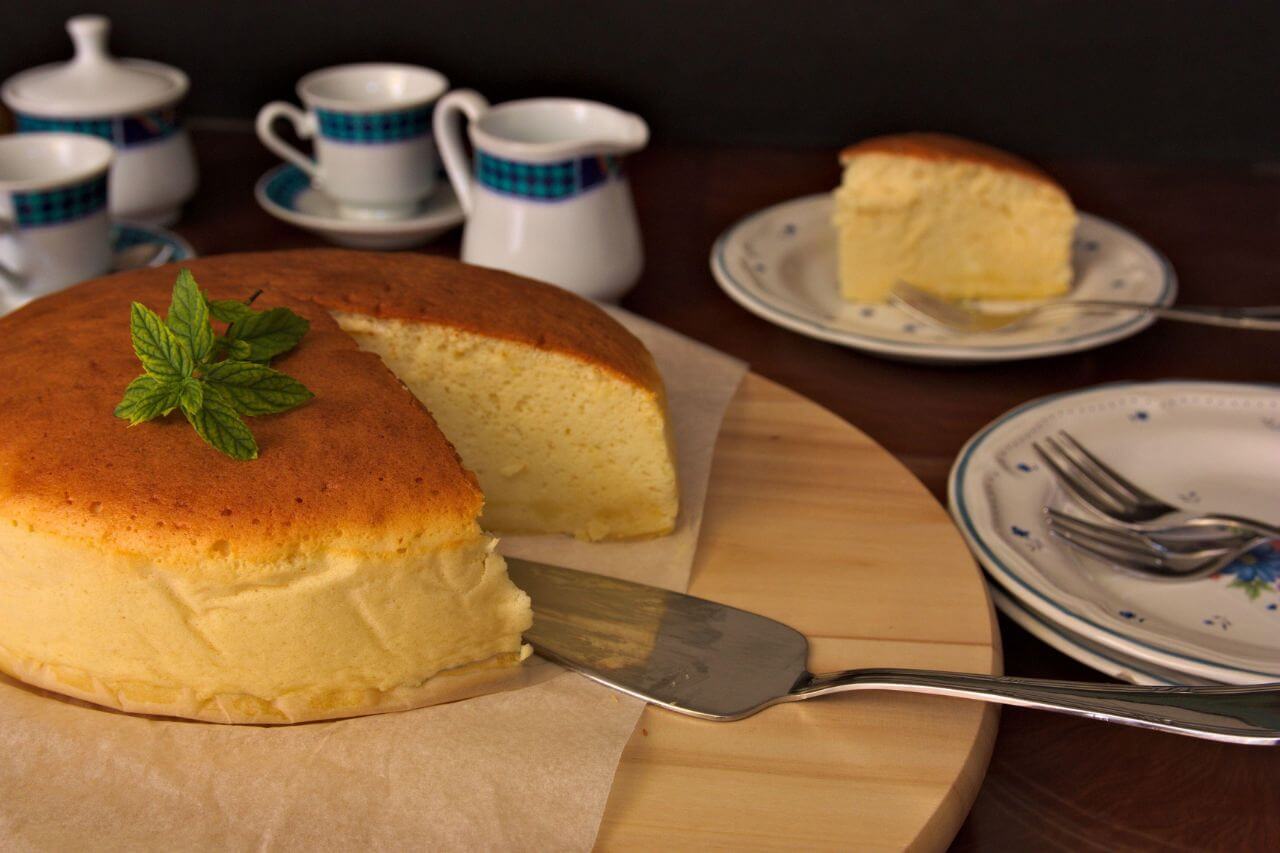
Japanese Cheesecake is unlike a traditional dense cheesecake. It is light, airy, and wonderfully soft, with a delicate crumb that almost melts in your mouth. Sometimes called Japanese cotton cheesecake, this dessert combines the richness of cream cheese with the airy texture of a soufflé.
The secret is in the whipped egg whites and gentle baking. Once you fold the meringue into the cream cheese batter and bake the cake slowly, it develops its signature tall, fluffy texture and lightly golden top.
Recipe at a Glance
Prep Time: 30 minutes
Bake Time: 60–70 minutes
Cooling Time: 1 hour
Total Time: About 2 hours 40 minutes
Yield: 10–12 slices
Oven Temperature: 320°F (160°C), then 300°F (150°C)
Pan: 8-inch round cake pan
Ingredients
For the Cheesecake
- 8 oz cream cheese, softened
- 1/4 cup unsalted butter
- 1/2 cup whole milk
- 6 large eggs, separated
- 1/2 cup granulated sugar
- 1 tsp vanilla extract
- 1/2 cup cake flour
- 2 tbsp cornstarch
- 1/4 tsp salt
- 1 tbsp lemon juice
For the Top
- Powdered sugar, for dusting
How to Make Japanese Cheesecake
1. Prepare the Pan and Oven
Preheat the oven to 320°F (160°C).
Grease an 8-inch round cake pan and line the bottom and sides with parchment paper. If your pan has a removable base, wrap the outside securely with aluminum foil to help prevent water from entering during the water bath.
Place the prepared pan inside a larger roasting pan.
2. Melt the Cream Cheese Mixture
Add the cream cheese, butter, and milk to a heatproof bowl.
Place the bowl over a saucepan of gently simmering water and stir until the mixture is completely smooth.
Remove from the heat and let it cool slightly.
The mixture should be warm and fluid rather than hot.
3. Add the Egg Yolks
Whisk the egg yolks into the cream cheese mixture one at a time.
Add the vanilla and lemon juice and mix until smooth.
Sift in the cake flour, cornstarch, and salt. Whisk gently until you have a smooth batter with no visible lumps.
Set the mixture aside.
4. Whip the Egg Whites
Place the egg whites in a clean, dry mixing bowl.
Beat them until foamy, then gradually add the sugar.
Continue beating until you have soft to medium peaks. When the whisk is lifted, the meringue should hold its shape but the tip should gently bend over.
Avoid whipping the egg whites until they become extremely stiff and dry.
5. Fold the Meringue Into the Batter
Add about one-third of the whipped egg whites to the cream cheese mixture.
Fold gently using a spatula to lighten the batter.
Add the remaining egg whites in two additions, folding carefully from the bottom of the bowl upward.
Stop as soon as the mixture is evenly combined.
The batter should look smooth, airy, and slightly fluffy.
6. Pour Into the Pan
Pour the batter into the prepared cake pan.
Gently tap the pan once or twice on the counter to remove large air bubbles.
Place the cake pan inside the roasting pan and carefully pour hot water into the roasting pan until it reaches about 1 inch up the side of the cake pan.
7. Bake Slowly
Place the cheesecake in the oven.
Bake at 320°F (160°C) for about 20 minutes.
Reduce the oven temperature to 300°F (150°C) and continue baking for another 40–50 minutes.
The top should be lightly golden, and the cake should look set but still have a gentle wobble in the center.
Turn off the oven and leave the cake inside with the door slightly open for about 15 minutes.
This gradual cooling helps reduce the chance of the cake collapsing suddenly.
8. Cool and Serve
Remove the cake from the oven and carefully take it out of the water bath.
Let it cool in the pan for about 20–30 minutes.
Gently remove the parchment and transfer the cheesecake to a serving plate.
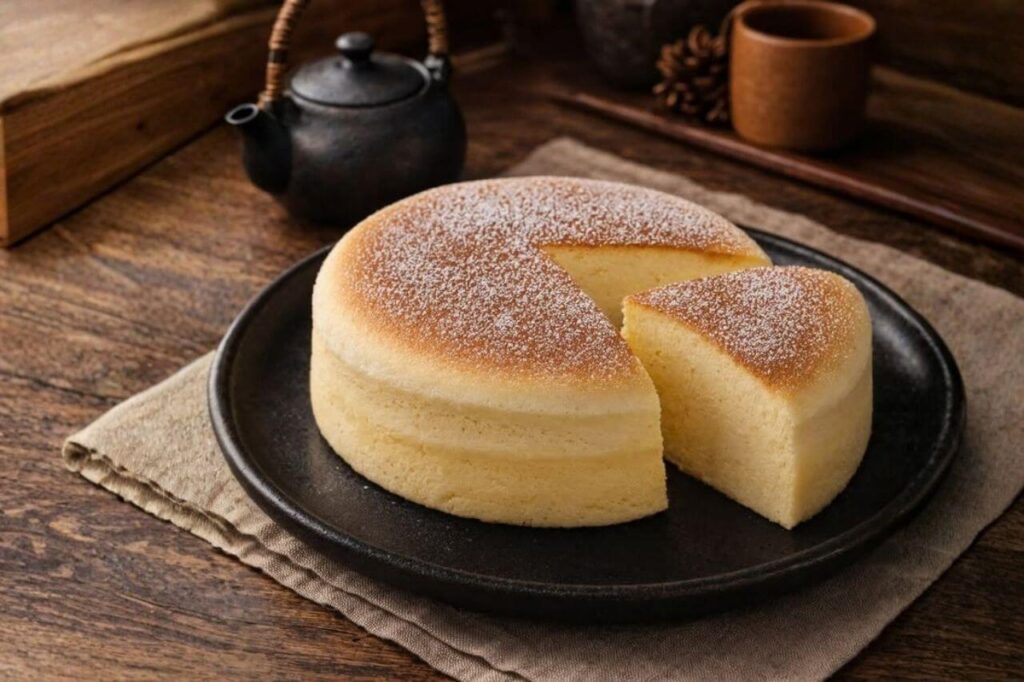
Dust with powdered sugar before slicing.
Japanese cheesecake can be served slightly warm or chilled, depending on your preferred texture.
What Makes Japanese Cheesecake So Fluffy?
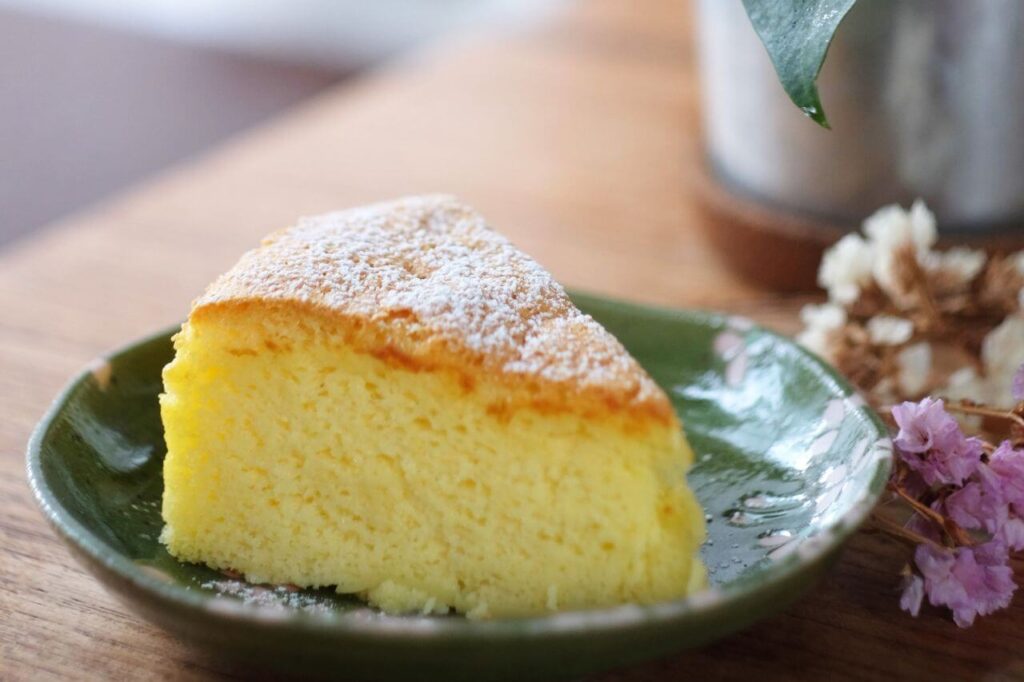
The airy texture comes mainly from whipped egg whites.
Unlike a classic cheesecake where all the eggs are mixed directly into the batter, Japanese cheesecake uses a meringue. Folding this meringue into the cream cheese mixture adds tiny air bubbles that expand during baking.
The water bath and gentle oven temperature then help the cake bake evenly without becoming dry.
Ingredient Notes
Cream cheese: Use full-fat cream cheese for a rich but smooth texture.
Eggs: Separating the eggs is essential because the whites are whipped into the meringue.
Cake flour: Its lighter protein content helps create a delicate crumb.
Cornstarch: Works with the cake flour to keep the cheesecake soft and tender.
Lemon juice: Adds a subtle brightness that balances the richness of the cream cheese.
Milk: Loosens the cream cheese mixture and contributes to the cake’s soft texture.
How to Get a Tall Japanese Cheesecake
The height of Japanese cheesecake depends heavily on the meringue.
Use a clean bowl with no traces of oil or egg yolk. Whip the egg whites until they form soft to medium peaks, then fold them into the batter carefully.
Overmixing can knock out the air, while very stiff meringue can be difficult to incorporate smoothly.
Why Did My Japanese Cheesecake Collapse?
A small amount of shrinking as the cheesecake cools is normal.
However, a large collapse can happen if the meringue was under- or over-whipped, the batter was mixed too aggressively, or the cake experienced a sudden temperature change.
Letting the cheesecake cool gradually inside the switched-off oven helps reduce dramatic shrinking.
Why Did My Cheesecake Crack?
Cracking can happen when the oven temperature is too high or the cake expands too quickly.
A gentle baking temperature and water bath create a moist environment and help the cheesecake rise more evenly.
If the top develops a small crack, don’t worry—the cake can still have a soft, airy interior.
How Do You Know Japanese Cheesecake Is Done?
The surface should be lightly golden and the center should have a gentle wobble when the pan is moved.
A skewer inserted into the center should come out mostly clean.
Avoid baking until the cake becomes completely firm, as this can result in a drier texture.
Can You Make Japanese Cheesecake Ahead of Time?
Yes. Japanese cheesecake can be prepared a day ahead.
Once cooled, cover it and refrigerate it until serving. Chilling gives the cake a slightly firmer texture and makes it easier to slice neatly.
For the softest texture, allow it to sit at room temperature for a short time before serving.
How to Store Japanese Cheesecake
Store the cheesecake covered in the refrigerator for up to 4 days.
For longer storage, individual slices can be wrapped tightly and frozen for up to 1 month. Thaw them in the refrigerator before serving.
What to Serve With Japanese Cheesecake
The delicate flavor of Japanese cheesecake pairs beautifully with:
- Fresh strawberries
- Blueberries or raspberries
- Whipped cream
- Powdered sugar
- Strawberry sauce
- Lemon curd
- Fresh fruit
A simple dusting of powdered sugar is often enough because the cake itself is already soft, creamy, and lightly sweet.
Frequently Asked Questions
Is Japanese cheesecake the same as regular cheesecake?
No. Traditional cheesecake is dense and creamy, while Japanese cheesecake is lighter and more airy because whipped egg whites are folded into the batter.
Can I use all-purpose flour instead of cake flour?
Yes, although cake flour produces a more delicate crumb. If using all-purpose flour, avoid overmixing the batter after adding the flour.
Why do I need a water bath?
The water bath provides gentle, even heat and moisture during baking. This helps the cheesecake rise smoothly and reduces the risk of a dry texture or cracked surface.
Can I make Japanese cheesecake without a water bath?
It is possible, but the texture and rise may not be as even. For the characteristic soft and fluffy Japanese cheesecake texture, a water bath is recommended.
Should Japanese cheesecake be served cold?
It can be enjoyed chilled, at room temperature, or slightly warm. Chilled cheesecake is firmer, while room-temperature cheesecake has a softer, more delicate texture.
Japanese cheesecake
Japanese Cheesecake is all about texture. The cream cheese gives it a gentle richness, while the whipped egg whites create the light, cotton-soft crumb that makes this cake so distinctive.
Take your time with the meringue, fold it gently, and let the cheesecake cool gradually after baking. Those small details are what turn a simple cream cheese batter into a beautifully airy Japanese-style cheesecake.
Related Posts

Stay Informed With the Latest & Most Important News
Previous Post
Next Post




Advertisement
