

Now Reading: Easy Turkish Baklava Recipe
-
01
Easy Turkish Baklava Recipe

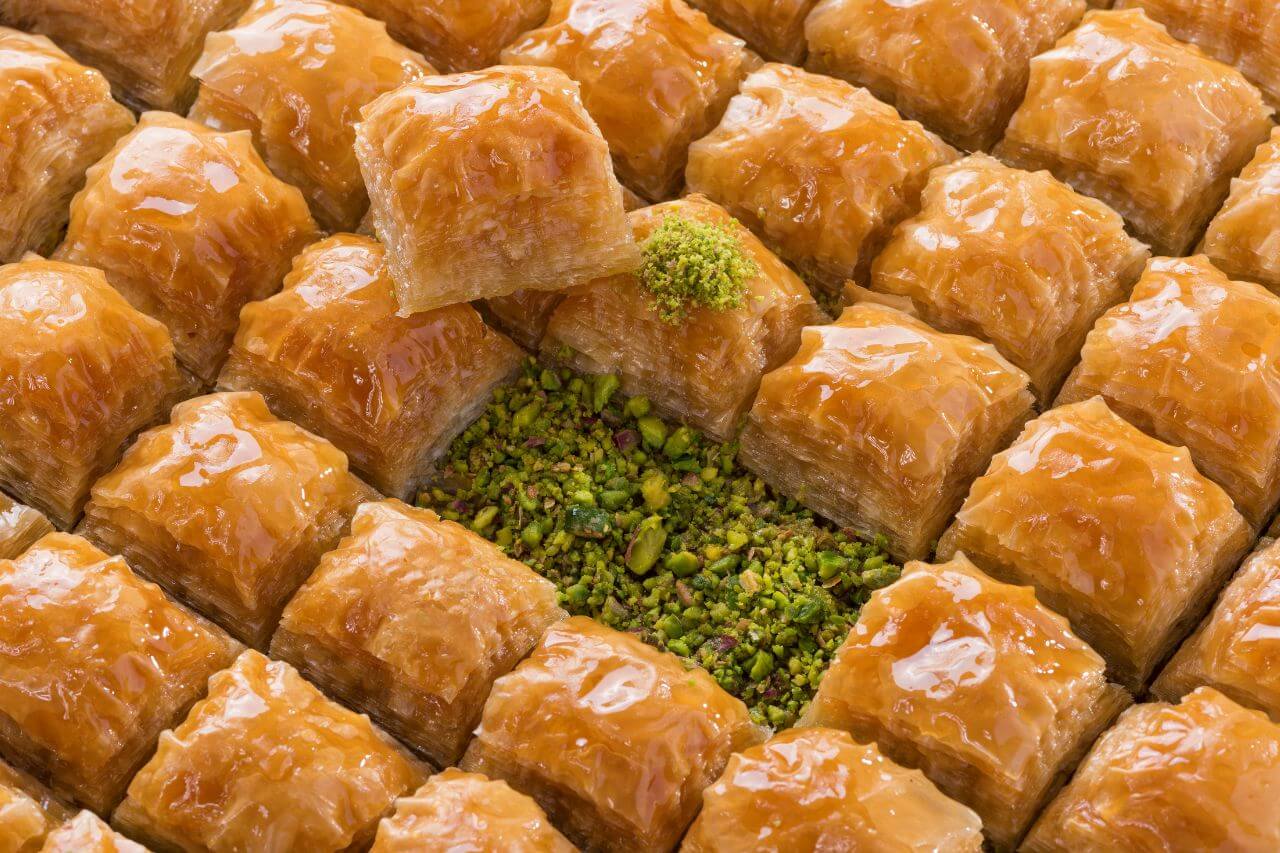
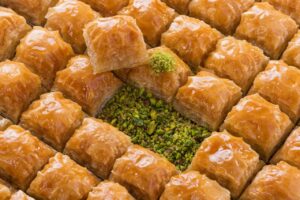
Golden, crisp layers of phyllo pastry, buttery roasted nuts, and a fragrant syrup come together in this classic Turkish Baklava. It looks impressive, but the method is surprisingly manageable once you understand how to layer the pastry and add the syrup at the right time.
Unlike some heavily spiced versions, Turkish baklava often lets the flavor of the nuts and butter take center stage. Pistachios are especially popular, giving the dessert its beautiful color and rich, nutty taste.
Recipe at a Glance
Prep Time: 30 minutes
Bake Time: 45–50 minutes
Cooling Time: 2 hours
Total Time: About 3 hours 20 minutes
Yield: 24 pieces
Oven Temperature: 350°F (175°C)
Pan: 9 x 13-inch baking pan
Ingredients
For the Baklava
- 1 lb phyllo dough, thawed
- 1 1/2 cups unsalted butter, melted
- 2 cups finely chopped pistachios
- 1/2 cup finely chopped walnuts
- 2 tbsp granulated sugar
- 1 tsp ground cinnamon
For the Syrup
- 2 cups granulated sugar
- 1 1/2 cups water
- 1 tbsp fresh lemon juice
- 1 tsp vanilla extract
For Garnishing
- 2–3 tbsp finely chopped pistachios
How to Make Turkish Baklava
1. Prepare the Syrup
Start with the syrup so it has time to cool.
Add the sugar and water to a saucepan over medium heat. Stir until the sugar dissolves, then bring the mixture to a gentle boil.
Add the lemon juice and simmer for about 8–10 minutes.
Remove from the heat and stir in the vanilla. Set aside to cool completely.
The syrup should be slightly thickened but still pourable.
2. Prepare the Nut Filling
Combine the chopped pistachios, walnuts, sugar, and cinnamon in a bowl.
Keep the nuts fairly finely chopped. Very large pieces can make the layers difficult to cut neatly.
3. Prepare the Phyllo
Preheat the oven to 350°F (175°C).
Unroll the thawed phyllo dough and cover it with a slightly damp kitchen towel while working. This prevents the delicate sheets from drying out.
Trim the phyllo if necessary so the sheets fit your 9 x 13-inch pan.
4. Build the First Layers
Brush the bottom of the baking pan generously with melted butter.
Place one sheet of phyllo into the pan and brush it lightly with butter.
Add another sheet and butter again.
Continue until you have about 8–10 sheets forming the bottom layer.
Don’t worry if the sheets wrinkle slightly. Those little folds can actually contribute to the finished texture.
5. Add the Nut Filling
Spread about one-third of the nut mixture evenly over the phyllo.
Add another few sheets of phyllo, brushing each one with butter.
Repeat with another layer of nuts, followed by more buttered phyllo.
Continue layering until all the nut mixture has been used.
Finish with several sheets of phyllo on top, generously brushing the final layers with melted butter.
6. Cut the Baklava
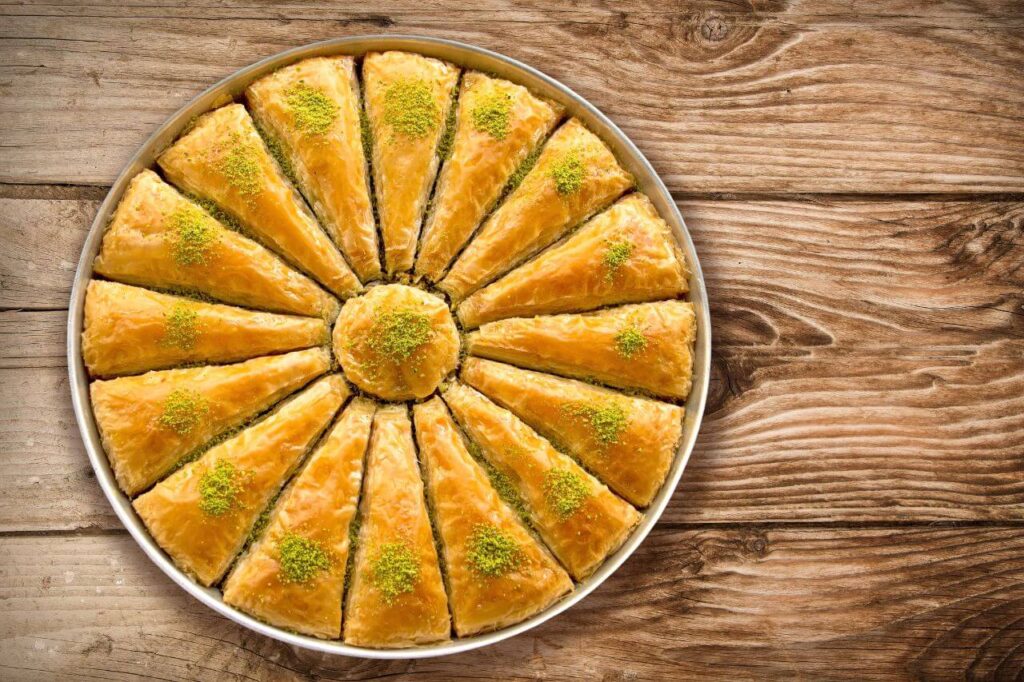
Using a sharp knife, cut the baklava into squares or diamonds before baking.
Cutting it while the pastry is still unbaked makes it much easier to create clean portions.
Pour any remaining melted butter evenly over the top.
7. Bake Until Golden
Place the pan in the oven and bake for 45–50 minutes.
The top should be deeply golden and crisp, and the edges should look well baked.
If the top is browning too quickly, loosely cover it with foil during the final part of baking.
8. Add the Syrup
Remove the hot baklava from the oven.
Slowly pour the cool syrup over the hot pastry, making sure it reaches the cuts and edges.
You should hear a gentle sizzling sound as the syrup meets the hot phyllo.
Allow the baklava to rest uncovered for at least 2 hours so the syrup can soak through the layers.
9. Garnish and Serve
Once the baklava has cooled and absorbed the syrup, sprinkle finely chopped pistachios over the top.
Serve at room temperature or slightly chilled.
What Makes Turkish Baklava So Special?
The beauty of Turkish baklava comes from contrast.
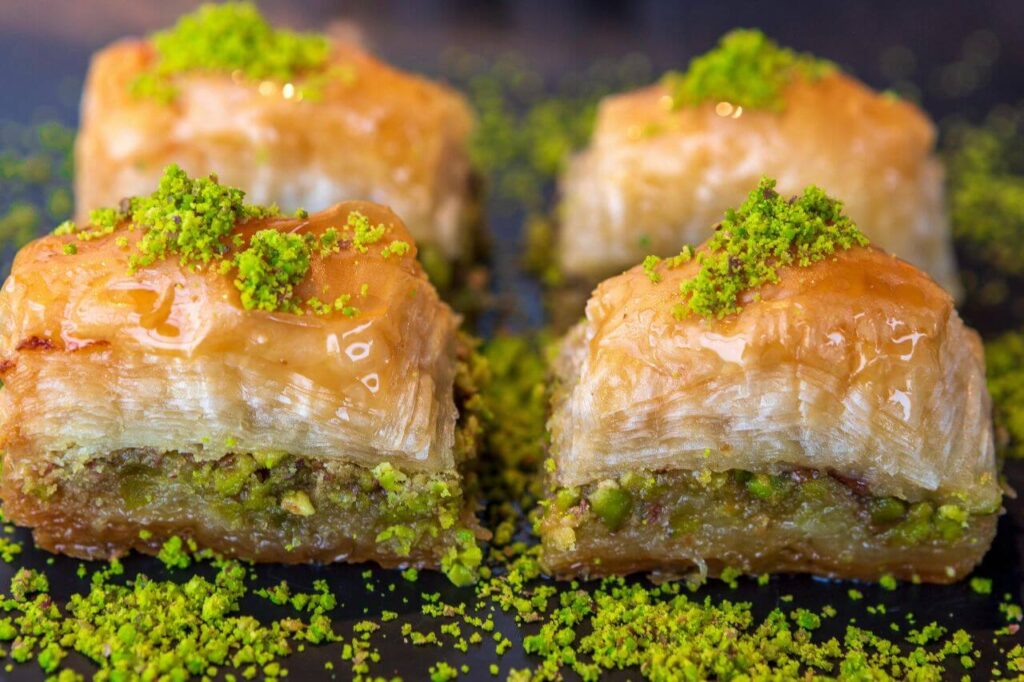
The top layers should be crisp and golden, while the inside becomes tender and rich from the syrup and butter. The nuts provide texture between the delicate sheets of pastry.
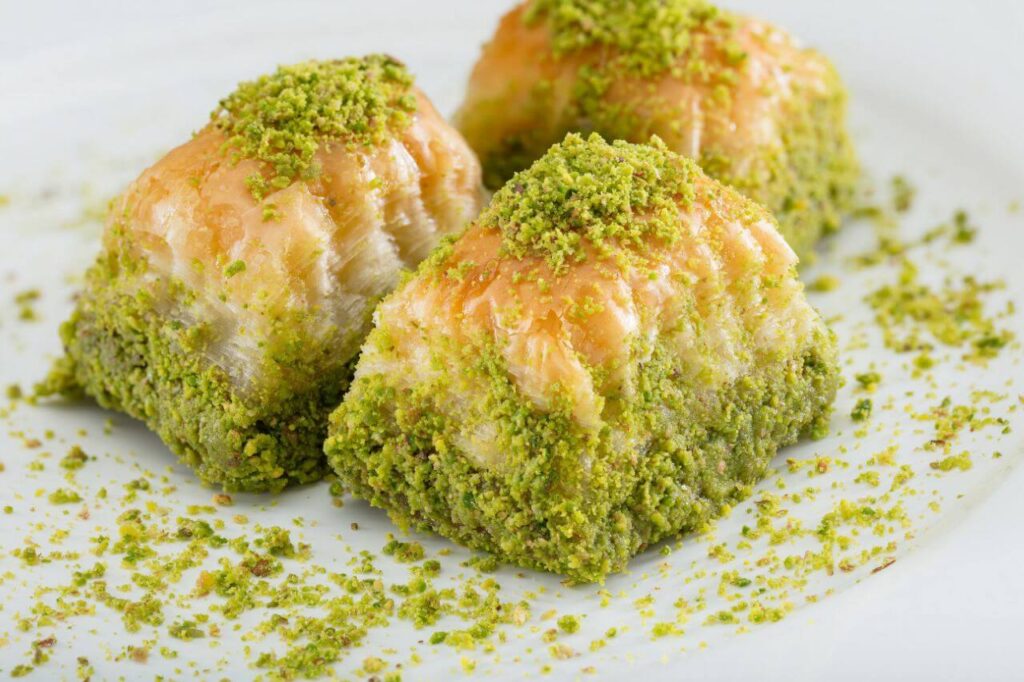
Pistachio baklava is particularly popular in Turkey, where pistachios are closely associated with several traditional baklava styles.
Ingredient Notes
Phyllo dough: Keep the sheets covered while assembling because they dry out quickly when exposed to air.
Butter: Melted butter separates the phyllo sheets and gives the finished baklava its rich flavor and golden color.
Pistachios: Finely chopped pistachios provide a traditional nutty flavor and beautiful green color.
Walnuts: Add depth and texture to the filling. You can use more pistachios if you prefer a pistachio-forward baklava.
Lemon juice: Prevents the syrup from becoming overly sweet and helps keep its texture smooth.
The Best Way to Layer Baklava
You don’t need every sheet to lie perfectly flat.
Brush each sheet with butter and spread the nuts evenly. Keep the bottom and top sections slightly thicker with phyllo so the baklava has enough structure to hold the syrup.
Most importantly, don’t skip the butter between layers. It is what helps create those characteristic crisp, separated sheets.
Why Is My Baklava Soggy?
Baklava can become soggy if the phyllo is not baked long enough or if too much syrup is added.
Make sure the pastry is deeply golden before removing it from the oven. The syrup should also be poured over the hot pastry after baking rather than added beforehand.
Let the finished baklava rest uncovered so excess moisture can evaporate while the syrup settles into the layers.
Should Baklava Be Served Hot or Cold?
Baklava is usually best once it has had time to cool and absorb the syrup.
Serving it immediately after adding the syrup can make the layers seem overly wet. Give it at least two hours to rest for a better texture and more developed flavor.
Can You Make Turkish Baklava Ahead of Time?
Yes. Baklava is an excellent make-ahead dessert.
In fact, preparing it several hours before serving gives the syrup plenty of time to settle into the layers.
You can make it a day ahead and keep it covered loosely at room temperature.
How to Store Turkish Baklava
Store baklava in an airtight container at room temperature for up to 5 days.
Keep the pieces in a single layer when possible so the delicate top remains crisp.
Baklava can also be refrigerated, but chilling can make the butter and syrup firmer. Let it come to room temperature before serving.
What to Serve With Turkish Baklava
Turkish baklava pairs beautifully with:
- Turkish coffee
- Black tea
- Plain yogurt
- Vanilla ice cream
- Kaymak or thick cream
- Fresh fruit
- A small cup of strong coffee
The slight bitterness of coffee or tea balances the sweetness of the syrup particularly well.
Frequently Asked Questions
Can I use only pistachios in Turkish baklava?
Yes. Pistachio-only baklava is a popular style and gives you a stronger nutty flavor and a beautiful green filling.
Can I use pre-ground nuts?
Finely chopped nuts are preferable because they give the filling more texture. Avoid turning them into a paste.
Do I have to cut baklava before baking?
It is strongly recommended. Cutting the pastry before baking makes it much easier to create clean squares or diamond shapes.
Why do I pour cool syrup over hot baklava?
The temperature contrast helps the crisp pastry absorb the syrup without becoming immediately heavy and soggy.
Can I freeze baklava?
Yes. Cool the baklava completely, place it in an airtight freezer-safe container, and freeze for up to 3 months. Thaw it at room temperature before serving.
Turkish Baklava
Turkish Baklava is a dessert where simple ingredients create something truly special. Thin layers of buttery phyllo, fragrant pistachios and walnuts, and a bright lemon-scented syrup come together in every crisp, sticky bite.
Take your time with the layering, bake the pastry until deeply golden, and give the finished baklava plenty of time to rest. Once the syrup has settled into the layers, you’ll have a beautiful homemade dessert ready to serve with Turkish coffee or tea.
Related Posts
Stay Informed With the Latest & Most Important News
Previous Post
Next Post


Advertisement
