





Now Reading: Easy French Crêpes Recipe
-
01
Easy French Crêpes Recipe

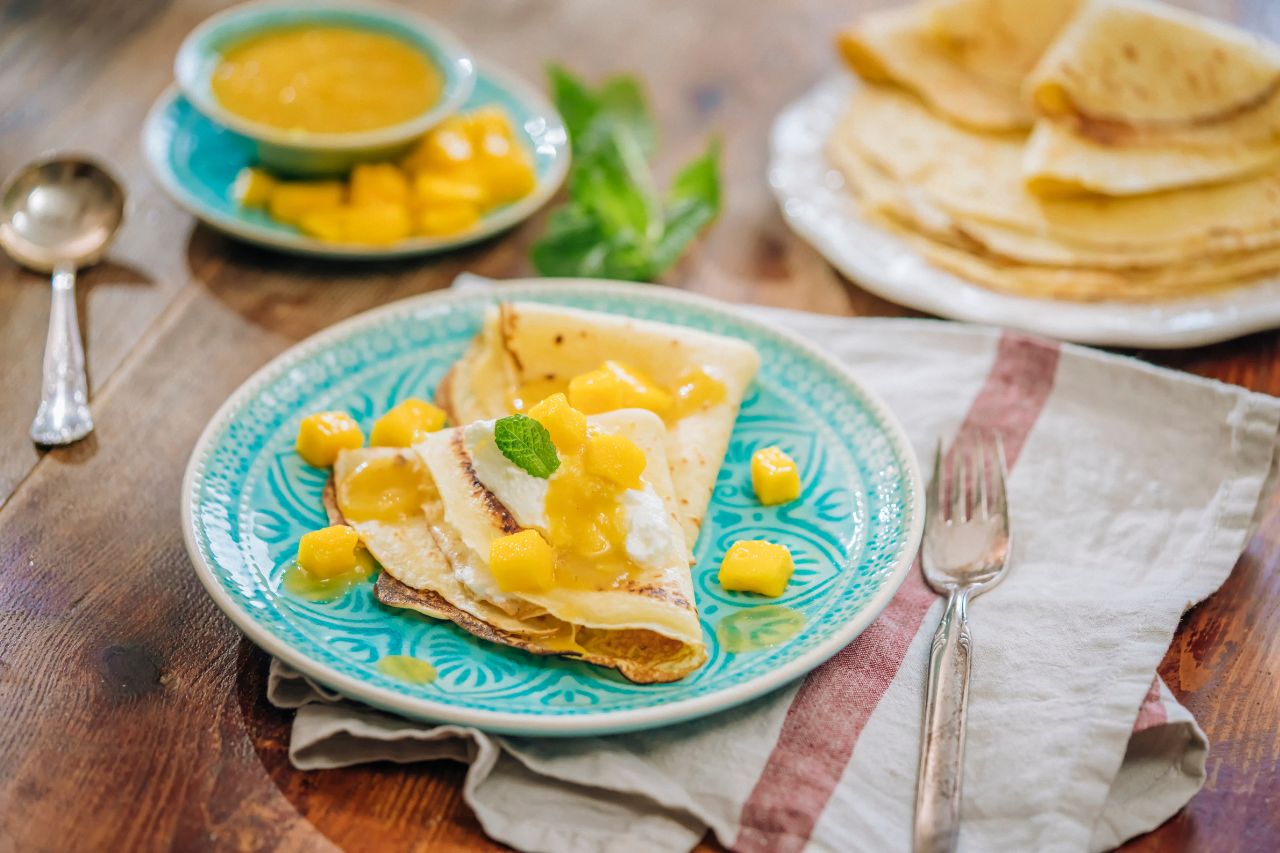
Thin, delicate, and lightly golden around the edges, French crêpes are one of those recipes that can turn a handful of simple ingredients into something special. The batter takes just a few minutes to mix, and once your pan is hot, each crêpe cooks in about a minute.
Serve them sweet with sugar, fresh fruit, chocolate, or whipped cream, or fill them with cheese, eggs, vegetables, or other savory ingredients. This easy French crêpe recipe gives you soft, flexible crêpes that are perfect for breakfast, brunch, dessert, or a quick snack.
Recipe at a Glance
Prep Time: 10 minutes
Resting Time: 30 minutes
Cook Time: 20 minutes
Total Time: About 1 hour
Yield: 10–12 crêpes
Pan: 8–10-inch nonstick skillet
Ingredients
- 1 1/2 cups all-purpose flour
- 2 tbsp granulated sugar
- 1/4 tsp salt
- 3 large eggs
- 1 1/2 cups whole milk
- 2 tbsp unsalted butter, melted
- 1 tsp vanilla extract
- Butter or oil, for cooking
How to Make French Crêpes
1. Start With the Batter
Add the flour, sugar, and salt to a large mixing bowl.
In a separate bowl, whisk the eggs, milk, melted butter, and vanilla until smooth.
Gradually pour the wet ingredients into the flour mixture while whisking continuously.
Keep whisking until the batter is smooth and fairly thin. A few small lumps are fine, but you can strain the batter through a fine-mesh sieve if you want an especially smooth result.
2. Let the Batter Rest
Cover the bowl and let the batter rest for 30 minutes at room temperature.
This gives the flour time to absorb the liquid and helps produce softer, more tender crêpes.
If you’re preparing the batter ahead of time, you can refrigerate it for up to 24 hours. Whisk it briefly before cooking.
3. Heat the Pan
Place an 8–10-inch nonstick skillet over medium heat.
Lightly grease it with butter or a small amount of oil.
The pan should be hot enough that the batter begins setting as soon as it hits the surface, but not so hot that the crêpe browns immediately.
4. Cook the First Crêpe
Give the batter a quick stir.
Pour about 1/4 cup of batter into the center of the pan.
Immediately lift and tilt the pan in a circular motion, allowing the batter to spread into a thin, even layer.
Return the pan to the heat and cook for about 45–60 seconds.
The edges should look dry and lightly golden, while the surface should no longer appear wet.
5. Flip and Finish
Run a thin spatula around the edge and carefully flip the crêpe.
Cook the second side for about 20–30 seconds, just until lightly golden.
Transfer it to a plate and continue with the remaining batter.
You can stack the cooked crêpes on top of one another. Their own warmth will keep them soft and flexible.
6. Fill and Serve
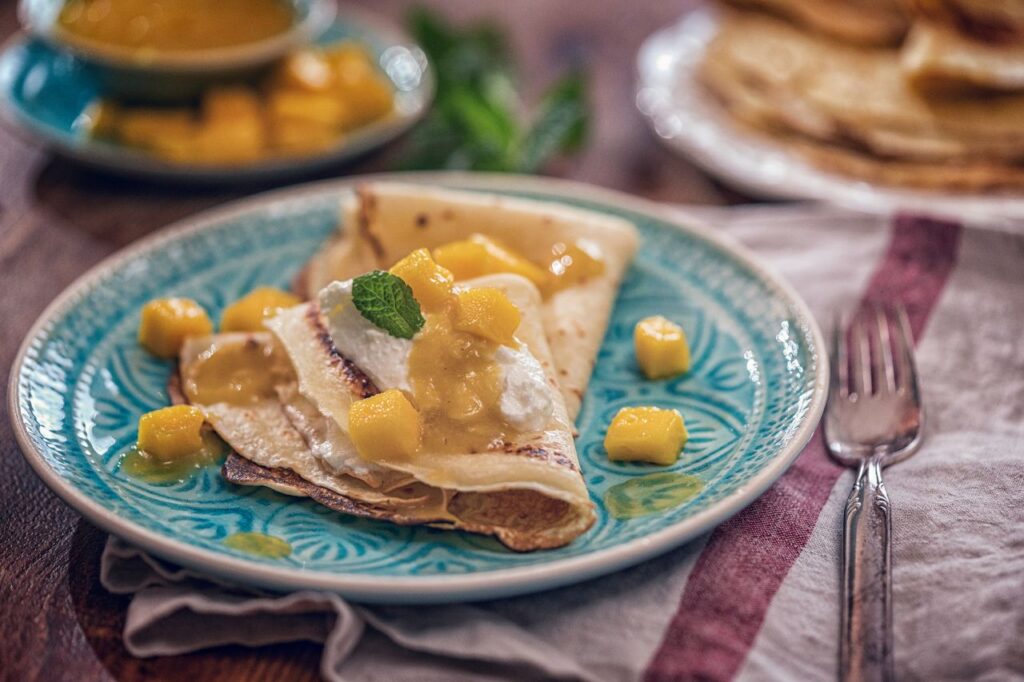
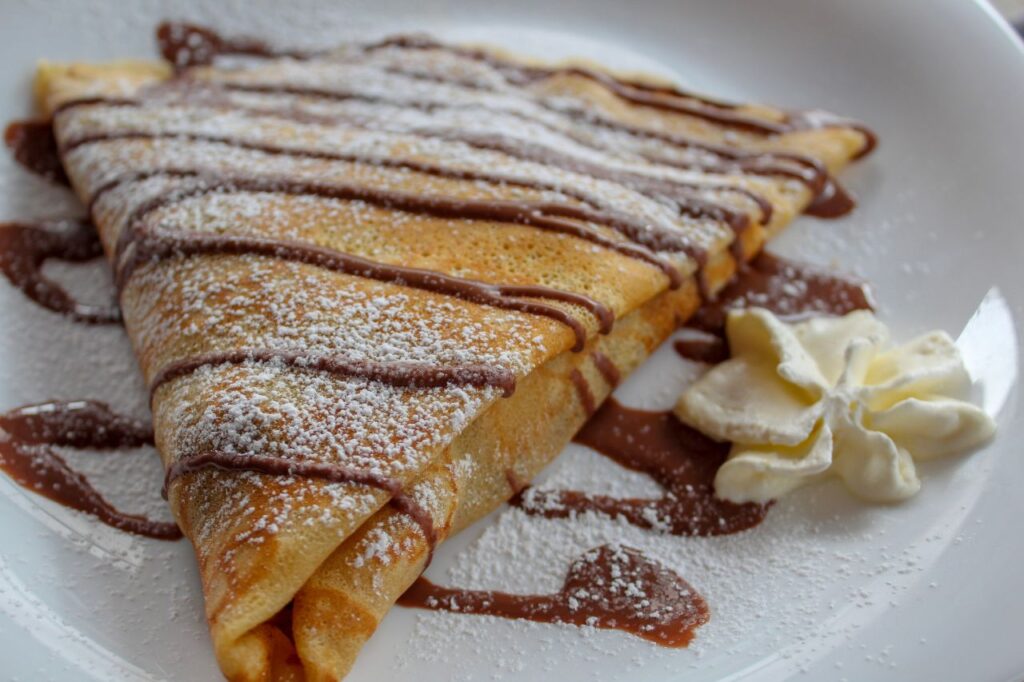
Fold each crêpe into quarters or roll it around your favorite filling.
For a simple sweet version, sprinkle with sugar and add fresh lemon juice.
For something richer, spread with chocolate hazelnut spread and top with sliced bananas or strawberries.
What Makes a Good French Crêpe?
A good crêpe should be thin without falling apart, soft enough to fold, and lightly golden around the edges.
The batter should be considerably thinner than pancake batter. If it feels thick or difficult to swirl around the pan, add a tablespoon or two of milk until it reaches a smooth, pourable consistency.
Ingredient Notes
All-purpose flour: Provides enough structure while keeping the crêpes tender.
Milk: Whole milk gives the batter a richer texture, but the main goal is a smooth, thin batter.
Eggs: Help bind the ingredients and give the crêpes their flexible texture.
Butter: Adds richness and helps prevent sticking.
Vanilla: Gives sweet crêpes a gentle aroma. You can leave it out if using the crêpes for savory fillings.
Sugar: Adds a small amount of sweetness and helps the crêpes brown lightly.
How Thin Should Crêpe Batter Be?
Crêpe batter should be thin enough to spread quickly across the pan.
Think of the consistency as similar to heavy cream. When you pour it into the skillet and tilt the pan, it should flow easily across the surface rather than sitting in one spot.
If your batter is too thick, add milk one tablespoon at a time until it becomes easier to swirl.
Why Did My Crêpes Turn Out Thick?
The most common reason is using too much batter for the size of your pan.
Start with about 1/4 cup and immediately swirl the pan to spread it into a thin layer. If the crêpes are still too thick, slightly reduce the amount of batter used for each one.
A batter that is too thick can also contribute to heavy crêpes, so check the consistency before cooking the entire batch.
How Do You Keep Crêpes From Sticking?
Use a good nonstick skillet and lightly grease it before the first crêpe.
You usually don’t need a lot of butter or oil between every crêpe. If the pan starts looking dry or the crêpes begin sticking, add a very small amount before continuing.
The first crêpe is often the least attractive because it helps you judge the pan temperature and batter consistency.
Sweet French Crêpe Filling Ideas
French crêpes are incredibly versatile. Try them with:
- Sugar and fresh lemon juice
- Chocolate hazelnut spread and bananas
- Strawberries and whipped cream
- Blueberries and powdered sugar
- Honey and sliced fruit
- Caramel sauce and apples
- Cinnamon sugar
- Vanilla ice cream and chocolate sauce
For an elegant dessert, fold the crêpes into quarters and dust them lightly with powdered sugar.
Savory French Crêpe Ideas
The same basic technique can be used for savory crêpes.
Try filling them with:
- Ham and cheese
- Scrambled eggs and cheese
- Sautéed mushrooms
- Spinach and cheese
- Chicken and vegetables
- Roasted vegetables
- Cheese and herbs
For savory crêpes, simply leave out the sugar and vanilla from the batter.
Can You Make French Crêpes Ahead of Time?
Yes. Cooked crêpes can be prepared ahead and stored in the refrigerator.
Stack them with parchment paper between the layers, cover tightly, and refrigerate for up to 3 days.
To serve, warm them briefly in a skillet or microwave until soft and flexible again.
How to Store French Crêpes
Allow cooked crêpes to cool completely before storing.
Stack them with parchment paper between each layer and place them in an airtight container or sealed bag.
They will keep in the refrigerator for up to 3 days.
For longer storage, freeze the stacked crêpes for up to 2 months. Thaw them in the refrigerator before reheating.
Frequently Asked Questions
Can I make crêpe batter the night before?
Yes. Cover the batter and refrigerate it overnight. Give it a gentle whisk before cooking because some flour may settle at the bottom.
Do I need a special crêpe pan?
No. A standard 8–10-inch nonstick skillet works very well. A dedicated crêpe pan can make the process easier, but it isn’t necessary.
Why is my first crêpe not good?
The first crêpe is often a test crêpe. It helps you determine whether the pan is too hot, whether you need more or less batter, and whether the batter needs thinning.
Can I make French crêpes without butter?
Yes. You can use a small amount of neutral cooking oil instead. Butter, however, adds a pleasant flavor and helps the crêpes brown.
Can I make gluten-free French crêpes?
Yes. A good gluten-free all-purpose flour blend can be used in place of regular flour, although the exact texture may vary depending on the blend.
Final Thoughts
French crêpes are proof that great food doesn’t always require complicated ingredients. Once you have a smooth, thin batter and learn how to swirl it quickly around a hot skillet, the rest becomes surprisingly easy.
Keep the first crêpe as your test, adjust the heat if needed, and don’t worry about making every crêpe perfectly round. Fill them with something as simple as lemon and sugar or turn them into a savory meal—the possibilities are almost endless.



Stay Informed With the Latest & Most Important News
Previous Post
Next Post




Advertisement
