
Now Reading: How to Make Easy Homemade Croissants
- 01
How to Make Easy Homemade Croissants
How to Make Easy Homemade Croissants


Learn how to make homemade croissants with a buttery, flaky crust and soft, tender center. This classic French pastry takes some time because the dough needs to be chilled, rolled, folded, and rested, but the process is straightforward when you follow each step carefully. Freshly baked croissants are perfect for breakfast, brunch, or a special weekend treat.
Complete Recipe at a Glance
Prep Time: 45 minutes
Chilling & Rising: 8–12 hours
Bake Time: 18–22 minutes
Total Time: About 9–13 hours
Yield: 12 croissants
Oven Temperature: 400°F (200°C)
Pan: Large baking sheet
Ingredients
For the Dough
- 4 cups all-purpose flour
- 1/4 cup granulated sugar
- 2 1/4 tsp active dry yeast
- 1 1/2 tsp salt
- 1 1/4 cups warm milk
- 2 tbsp unsalted butter, melted
For the Butter Layer
- 1 cup unsalted butter, cold
- 1 tbsp all-purpose flour
For the Egg Wash
- 1 large egg
- 1 tbsp milk



How to Make Homemade Croissants
1. Prepare the Dough
Add the warm milk, yeast, and sugar to a large bowl. Let it sit for about 5–10 minutes until the yeast becomes slightly foamy.
Add the flour, salt, and melted butter. Mix until a rough dough forms. Knead for about 5–7 minutes until the dough becomes smooth and elastic.
Shape it into a ball, cover, and refrigerate for at least 1 hour or until chilled.
2. Prepare the Butter Layer
Place the cold butter between two sheets of parchment paper. Gently pound and roll it into a flat rectangle about 8 x 5 inches.
The butter should be firm but flexible. If it becomes too soft, refrigerate it for a few minutes before continuing.
3. Enclose the Butter
Roll the chilled dough into a rectangle approximately 12 x 8 inches.
Place the butter rectangle in the center and fold the dough over it, completely covering the butter. Pinch the edges gently to seal.
You now have a butter-filled dough packet ready for laminating.
4. Make the First Fold
Roll the dough into a long rectangle, keeping the butter evenly distributed inside.
Fold the dough into thirds, like folding a letter. This creates layers of dough and butter.
Wrap the dough and refrigerate for 30–45 minutes.
5. Repeat the Folds
Roll the chilled dough out again and repeat the letter fold.
Refrigerate for another 30–45 minutes, then complete one final roll and fold.
Keeping the dough cold between folds is essential. If the butter starts becoming soft or leaking out, stop rolling and chill the dough before continuing.
6. Shape the Croissants
Roll the dough into a large rectangle about 1/4 inch thick.
Cut the dough into long triangles. Each triangle should have a wide base and a pointed tip.
Make a small slit in the center of each wide base. Gently stretch the triangle, then roll it tightly from the base toward the tip.
Place each croissant on a parchment-lined baking sheet with the pointed tip tucked underneath.
7. Let the homemade croissants Rise
Cover the shaped croissants loosely and leave them at room temperature for about 1–2 hours.
They should look noticeably puffed and feel light and delicate. Avoid placing them somewhere very hot because excessive heat can melt the butter.
8. Add the Egg Wash
Whisk together the egg and milk.
Brush a thin layer over each croissant, avoiding heavy pooling around the edges.
9. Bake
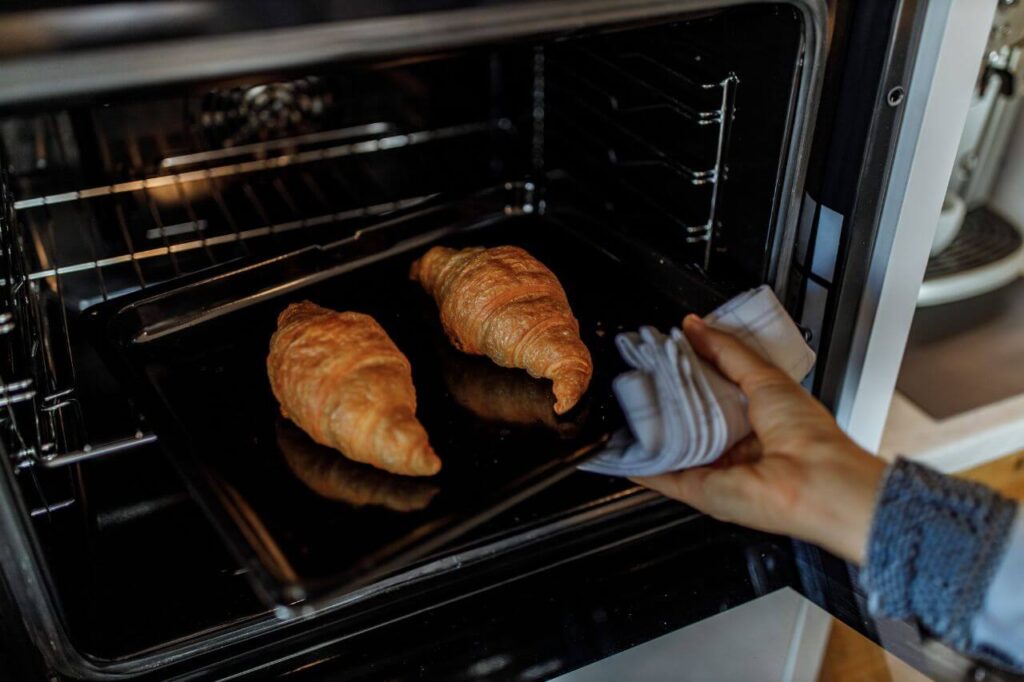
Preheat the oven to 400°F (200°C).
Bake the homemade croissants for 18–22 minutes, or until deeply golden brown and crisp on the outside.
The finished croissants should feel light, have visible flaky layers, and sound slightly crisp when tapped.
Let them cool for about 10 minutes before serving.
Why Homemade Croissants Are Worth It
Homemade croissants have a crisp, golden exterior with delicate layers that separate when you pull them apart. The combination of yeast-risen dough and laminated butter creates the signature flaky texture that makes croissants so special.
The key is not rushing the chilling and resting stages. Cold butter creates distinct layers, while proper proofing gives the homemade croissants their light interior.
Ingredient Notes
All-purpose flour: Gives the dough enough structure while keeping the homemade croissants tender.
Yeast: Helps the dough rise and creates a light, airy texture.
Butter: Use good-quality unsalted butter with a firm texture. Butter is responsible for the flaky layers and rich flavor.
Milk: Adds softness and richness to the dough.
Egg wash: Gives the baked croissants their glossy, deep golden finish.
Tips for Flaky Homemade Croissants
- Keep the dough and butter cold throughout the lamination process.
- Do not rush the chilling periods between folds.
- Roll the dough evenly so the butter layers remain consistent.
- If the butter cracks, allow the dough to sit for a few minutes before rolling gently.
- If the butter begins melting, refrigerate the dough immediately.
- Let the shaped croissants proof until visibly puffy before baking.
- Bake until properly golden rather than removing them while they are still pale.
How Do You Know When Croissants Are Properly Proofed?
A properly proofed croissant should look noticeably larger and feel light when gently touched. The layers should be visible, and the dough should have a soft, slightly springy appearance.
If the croissants still look dense and firm, give them more time to rise before baking.
Can You Make Croissant Dough Ahead of Time?
Yes. Croissant dough works well as an overnight recipe. After the initial dough preparation, refrigerate it overnight and continue with the butter lamination and shaping the next day.
You can also freeze shaped, unbaked croissants. Freeze them on a tray first, then transfer them to an airtight freezer-safe container or bag. Thaw and proof them before applying the egg wash and baking.
How to Store Homemade Croissants
Store baked croissants in an airtight container at room temperature for up to 2 days.
For the best texture, reheat them in a 350°F (175°C) oven for about 5–8 minutes. This helps restore some of their crispness.
What to Serve With Croissants
Fresh croissants are delicious on their own, but they also pair well with:
- Butter and fruit preserves
- Honey or chocolate spread
- Fresh berries and cream
- Scrambled eggs
- Cheese and sliced vegetables
- Coffee or tea
Store leftover homemade croissants in an airtight container in the fridge and eat within 4 days for the best quality.
For the best results with this homemade croissants, follow the steps in order and check for doneness a few minutes before the time is up.
Serve this homemade croissants fresh and enjoy it while the flavors are at their best.
Frequently Asked Questions
Why are my croissants not flaky?
The butter may have become too warm during lamination, or the dough may not have been chilled enough between folds. Keeping both the dough and butter at the right temperature is essential for distinct layers.
Why did the butter leak out while baking?
Butter can leak if the dough becomes too warm, the layers were rolled too thin, or the croissants were under-proofed. Make sure the shaped croissants are properly proofed and remain cool before baking.
Can I use salted butter?
Unsalted butter gives you better control over the salt in the dough, so it is preferred for this recipe.
Can I make croissants without a stand mixer?
Yes. This recipe can be made completely by hand. Knead the dough until it becomes smooth and elastic, then follow the same chilling and folding process.
Final Thoughts
Homemade croissants take patience, but the result is worth the effort. Once you understand how to keep the butter cold, create even layers, and properly proof the shaped dough, you can make beautifully golden, flaky croissants right in your own kitchen. Serve them warm for breakfast, brunch, or whenever you want a bakery-style pastry at home.
For safe storage times, follow the USDA leftovers and food safety guidelines. For another weekend bake, try our easy homemade cinnamon rolls and these easy homemade blueberry muffins.
Related Posts



Stay Informed With the Latest & Most Important News
Previous Post
Next Post




Advertisement