





Now Reading: Easy Thai Green Curry Recipe With Chicken and Coconut Milk
-
01
Easy Thai Green Curry Recipe With Chicken and Coconut Milk


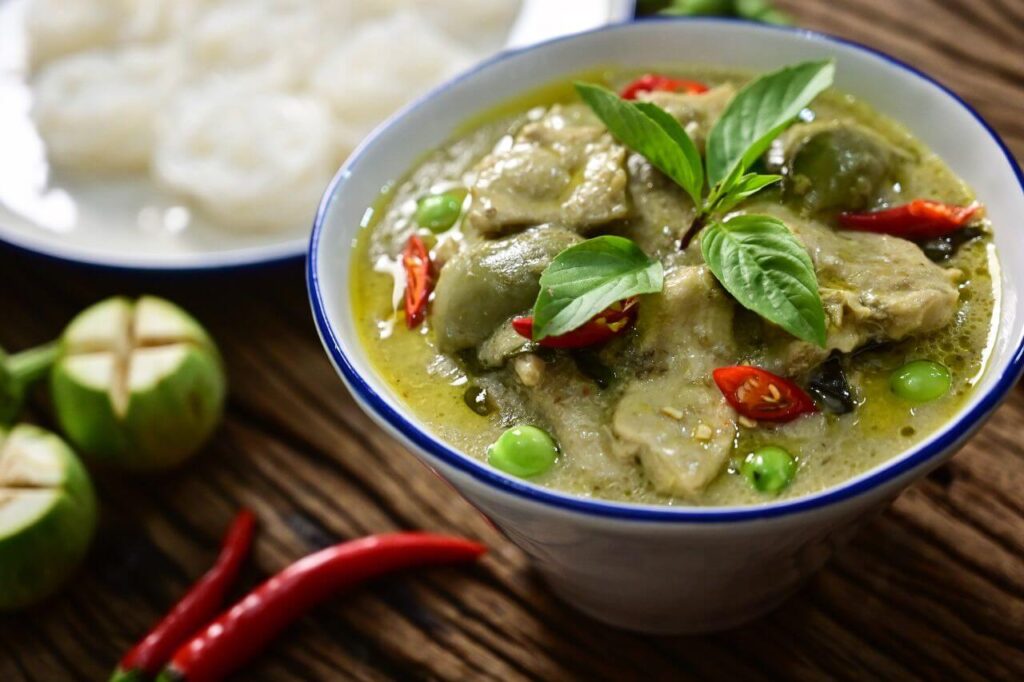
Thai Green Curry is a fragrant, creamy dish made with tender chicken, green curry paste, coconut milk, and colorful vegetables. It has the perfect balance of spicy, savory, slightly sweet, and aromatic flavors, making it a comforting meal that comes together surprisingly quickly.
This easy Thai Green Curry recipe uses simple ingredients and one skillet or pot. Serve it over steamed jasmine rice to soak up the creamy coconut curry sauce.
Thai Green Curry Recipe at a Glance
- Prep Time: 15 minutes
- Cook Time: 25 minutes
- Total Time: 40 minutes
- Servings: 4
- Cuisine: Thai
- Main Ingredient: Chicken
- Best Served With: Jasmine rice
Ingredients
For the Curry
- 1 1/2 lb boneless, skinless chicken thighs, thinly sliced
- 1 tbsp vegetable oil
- 3 tbsp Thai green curry paste
- 1 can (13.5 oz) full-fat coconut milk
- 1 cup chicken broth
- 1 tbsp fish sauce
- 1 tbsp brown sugar
- 1 red bell pepper, thinly sliced
- 1 cup broccoli florets
- 1 small zucchini, sliced
- 1/2 cup green beans, trimmed
- 1 tbsp fresh lime juice
- 1/2 cup fresh Thai basil leaves
For Serving
- 4 cups cooked jasmine rice
- Fresh cilantro, optional
- Lime wedges
- Extra Thai basil, optional
How to Make Thai Green Curry
1. Prepare the Chicken and Vegetables
Slice the chicken thighs into thin, bite-sized pieces.
Prepare the bell pepper, broccoli, zucchini, and green beans so everything is ready before you begin cooking.
Cutting the vegetables into similar-sized pieces helps them cook evenly while still keeping some texture.
2. Fry the Curry Paste
Heat the vegetable oil in a large skillet or saucepan over medium heat.
Add the Thai green curry paste and cook for 1–2 minutes, stirring frequently.
You should notice the curry paste becoming fragrant. This short step helps release the aromas of the herbs and spices in the paste.
3. Add the Coconut Milk
Pour in about half of the coconut milk and stir well to combine it with the curry paste.
Let it simmer gently for 2–3 minutes.
The coconut milk should become lightly colored and fragrant rather than boiling aggressively.
4. Cook the Chicken
Add the sliced chicken to the curry mixture.
Stir well and cook for approximately 5–7 minutes, until the chicken is mostly cooked through.
Pour in the remaining coconut milk and chicken broth.
Bring everything to a gentle simmer.
5. Add the Vegetables
Add the bell pepper, broccoli, zucchini, and green beans.
Simmer for 5–7 minutes, stirring occasionally, until the chicken is fully cooked and the vegetables are tender but still slightly crisp.
Avoid cooking the vegetables for too long because Thai Green Curry is especially good when the vegetables retain some texture.
6. Season the Curry
Stir in the fish sauce and brown sugar.
Taste the curry and adjust the balance if necessary.
Add the fresh lime juice at the end. The lime provides acidity that helps balance the creamy coconut milk and savory curry paste.
7. Add the Thai Basil
Turn the heat to low and stir in the fresh Thai basil leaves.
Cook for about 30 seconds to 1 minute, just until the leaves wilt slightly.
Don’t cook the basil for too long because you want to preserve its fresh aroma.
8. Serve
Spoon the hot Thai Green Curry over steamed jasmine rice.
Garnish with additional Thai basil, fresh cilantro if desired, and lime wedges.
Serve immediately while the curry is hot and creamy.
Why You’ll Love This Thai Green Curry
Thai Green Curry is packed with contrasting flavors. Creamy coconut milk softens the heat of the curry paste, while fish sauce adds savory depth and lime juice brings freshness.
The chicken absorbs the fragrant curry sauce, while the vegetables add color and texture.
It is also flexible enough for a quick weeknight dinner. Once the ingredients are prepared, the curry cooks in one pot and can be served with freshly steamed rice.
Ingredient Notes
Thai green curry paste: This is the main source of the curry’s characteristic flavor and heat. Different brands vary in strength, so start with the recommended amount and adjust after tasting.
Coconut milk: Full-fat coconut milk creates a rich, creamy sauce. Shake the can well before opening.
Chicken thighs: Thigh meat stays tender in the curry and is less likely to dry out than lean chicken breast.
Fish sauce: Fish sauce provides salty, savory depth. You only need a small amount because its flavor is concentrated.
Brown sugar: A little sweetness balances the heat and saltiness of the curry.
Thai basil: Thai basil has a distinctive aromatic flavor and works particularly well with green curry.
Lime juice: Fresh lime juice adds brightness and prevents the coconut-based sauce from tasting too heavy.
How Do You Make Thai Green Curry Less Spicy?
The easiest way is to use less green curry paste. You can also add more coconut milk to soften the heat.
If the curry tastes too spicy after cooking, a little extra brown sugar and coconut milk can help balance the flavors.
It’s better to start with less curry paste and add more later than to make the curry too hot from the beginning.
How Do You Thicken Thai Green Curry?
Thai Green Curry should be creamy but still loose enough to spoon over rice.
For a thicker sauce, allow the curry to simmer uncovered for a few extra minutes. This lets some liquid evaporate naturally.
Avoid adding large amounts of flour or cornstarch because traditional Thai-style curry gets its creamy texture primarily from coconut milk and the curry paste.
Can You Make Thai Green Curry Ahead of Time?
Yes. The curry can be cooked ahead and stored in the refrigerator for up to 3 days.
Allow it to cool before transferring it to an airtight container.
Reheat gently on the stovetop over medium-low heat. Add a splash of water or coconut milk if the sauce has become too thick.
For the freshest flavor, add a little fresh lime juice and basil after reheating.
Thai Green Curry Variations
Thai Green Curry with shrimp: Replace the chicken with peeled shrimp. Add the shrimp toward the end of cooking because they cook much faster than chicken.
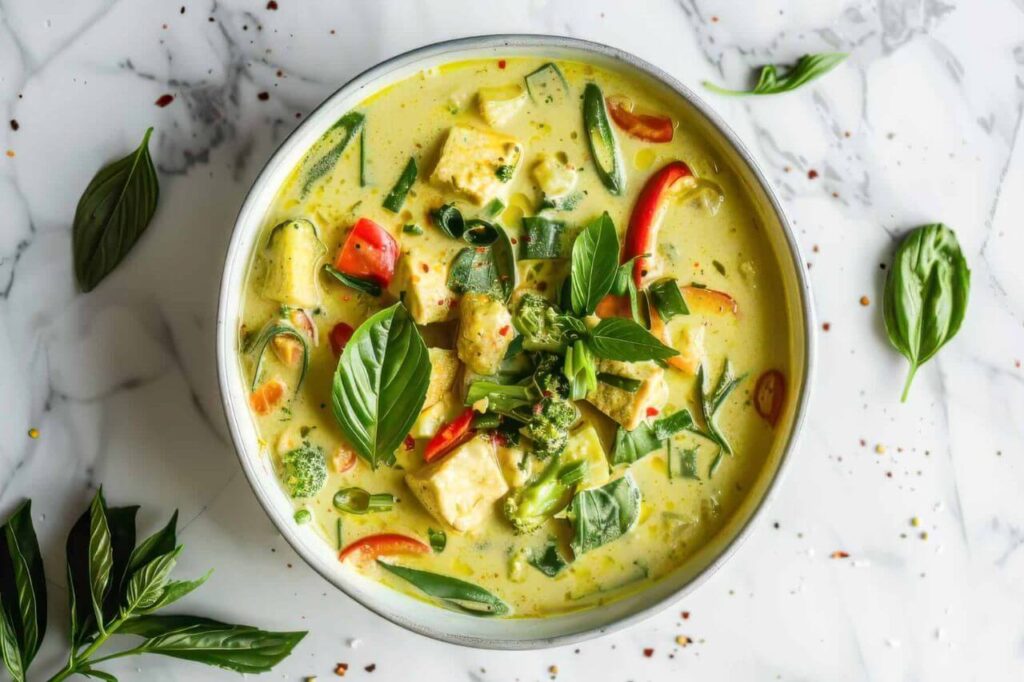
Vegetarian Thai Green Curry: Replace the chicken with tofu and use vegetable broth. Make sure the curry paste and other ingredients are suitable for your dietary needs.
Thai Green Curry with beef: Use thinly sliced beef and cook it briefly so it stays tender.
Thai Green Vegetable Curry: Use a combination of broccoli, bell peppers, zucchini, green beans, mushrooms, and baby corn.
Extra creamy green curry: Add a little more coconut milk for a milder and creamier sauce.
What to Serve With Thai Green Curry
Jasmine rice is the classic choice because its fragrant grains pair beautifully with the creamy curry sauce.
You can also serve Thai Green Curry with:
- Brown rice
- Coconut rice
- Rice noodles
- Thai cucumber salad
- Steamed vegetables
- Fresh spring rolls
- Roti or flatbread
How to Store Leftover Thai Green Curry
Store leftover curry in an airtight container in the refrigerator for up to 3 days.
Keep the rice separate whenever possible so it doesn’t absorb all the curry sauce.
Reheat the curry gently until piping hot. Add a little coconut milk or water if the sauce has thickened during refrigeration.
Frequently Asked Questions
What does Thai Green Curry taste like?
Thai Green Curry is creamy, aromatic, savory, and slightly sweet, with a noticeable chili heat. Green curry paste commonly contains herbs and aromatics such as green chilies, lemongrass, garlic, and ginger.
Is Thai Green Curry very spicy?
It can be. The heat depends largely on the green curry paste you use. Start with a moderate amount and add more if needed.
Can I use chicken breast instead of thighs?
Yes. Chicken breast works well, but it should not be overcooked because it is leaner and can become dry.
Can I use light coconut milk?
Yes, but the curry will be less rich and creamy. Full-fat coconut milk gives the best texture for this recipe.
Can I make Thai Green Curry without fish sauce?
Yes. For a vegetarian version, use a suitable vegetarian alternative and vegetable broth. The flavor will be slightly different.
What vegetables are good in Thai Green Curry?
Bell peppers, broccoli, green beans, zucchini, bamboo shoots, baby corn, mushrooms, and eggplant all work well.
Final Thoughts
This easy Thai Green Curry combines tender chicken, creamy coconut milk, fragrant green curry paste, crisp vegetables, Thai basil, and fresh lime into one comforting meal.
The curry comes together quickly, but the combination of aromatics, coconut milk, savory fish sauce, and fresh herbs makes it taste much more complex than the cooking process suggests.
Serve it over warm jasmine rice and finish with fresh lime for a flavorful homemade Thai-inspired dinner.
Related Posts


Stay Informed With the Latest & Most Important News
Previous Post
Next Post



Advertisement
