


Now Reading: Thai Vegetable Curry in 35 Minutes
- 01
Thai Vegetable Curry in 35 Minutes


Thai vegetable curry is the fastest way to put a Thai restaurant favorite on the table at home, and this version is ready in 35 minutes. Red curry paste, coconut milk, and a pan full of vegetables cook into a rich, fragrant sauce that coats jasmine rice beautifully. This thai vegetable curry is fully meat free, so it works for vegetarian dinners, and it uses vegetables you can find in any supermarket.
Quick Recipe Overview
Prep time: 15 minutes | Cook time: 20 minutes | Total time: 35 minutes | Servings: 4 | Yield: 4 servings
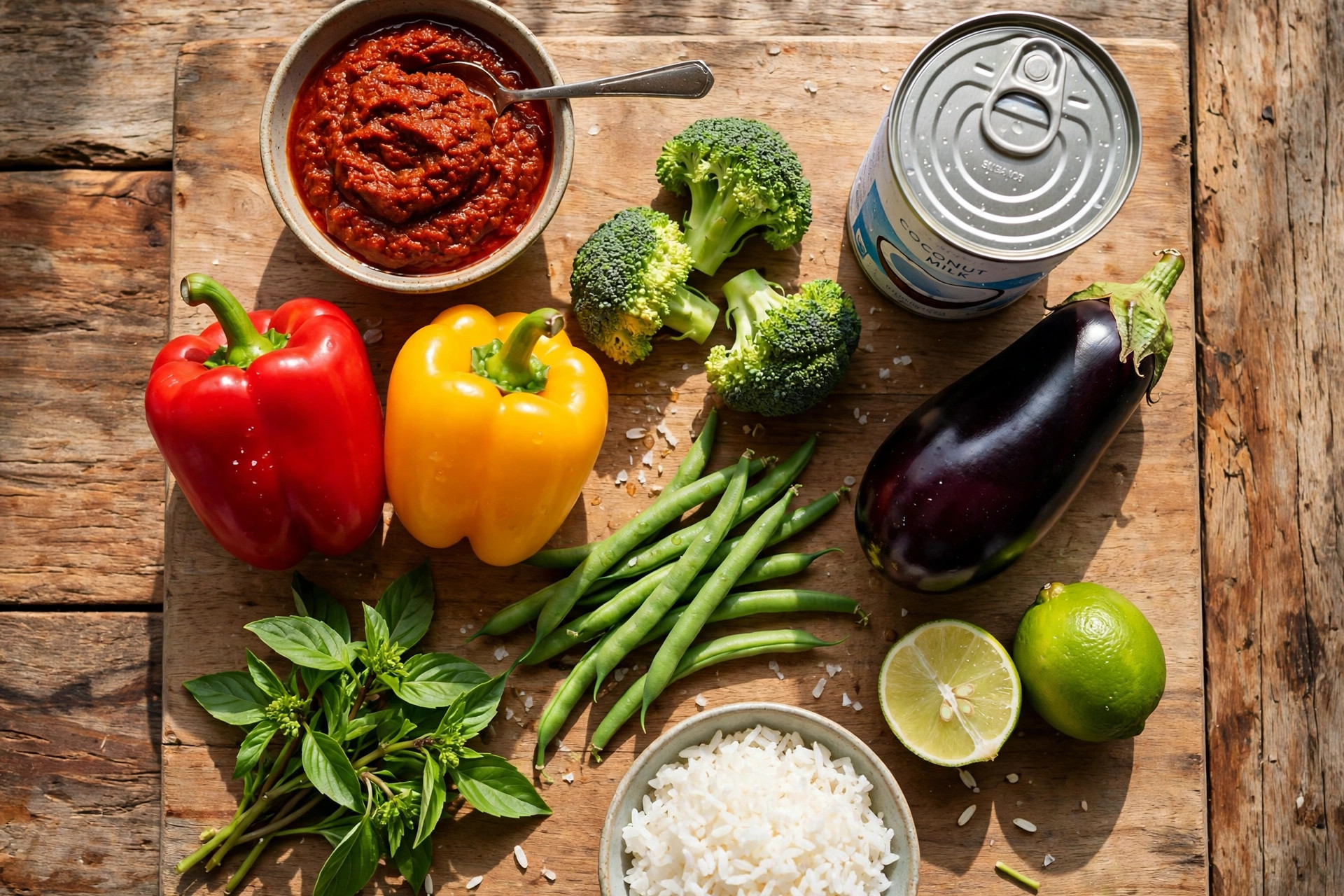
Ingredients at a glance: Thai red curry paste, coconut milk, eggplant, bell pepper, broccoli, green beans, Thai basil, lime, and jasmine rice.
Quick steps: 1. Fry the curry paste in coconut cream. 2. Add the vegetables and the rest of the coconut milk. 3. Simmer 15 minutes until tender. 4. Stir in Thai basil and lime, then serve your thai vegetable curry over jasmine rice.
Why Thai Vegetable Curry Works So Well
The sauce is the first reason. Thai red curry paste brings heat, lemongrass, and galangal in one spoonful, and coconut milk turns it into a silky sauce that clings to every vegetable. The paste does most of the work, so thai vegetable curry tastes layered and complex even though the ingredient list is short and the cooking takes 20 minutes.
The second reason is the vegetables. Eggplant soaks up the sauce and turns soft and rich, bell pepper stays sweet and bright, broccoli keeps a little bite, and green beans add a fresh snap. Each vegetable cooks at its own pace in the same pan, so thai vegetable curry has texture in every spoonful instead of one soft mass.
It also fits real life. The curry takes 35 minutes from chopping board to table, needs one pan and one pot of rice, and feeds four people for less than a takeaway order. Thai vegetable curry works for a weeknight dinner, a meat free Monday, or a Friday night when you want something warming without a long cook. Make it once and it becomes a regular in your rotation.
Thai vegetable curry also earns its place on the table for what it is not. There is no meat to brown, no long simmer, and no special equipment. The dish comes from Thai home cooking, where a good curry paste and fresh vegetables are enough, and that simplicity is why thai vegetable curry works so well for beginners.
Ingredients for Thai Vegetable Curry
For the curry, you need 3 tablespoons of Thai red curry paste, 400 ml of full fat coconut milk, 1 small eggplant, 1 red bell pepper, 1 yellow bell pepper, 2 cups of broccoli florets, 150 grams of green beans, 1 tablespoon of vegetable oil, 1 tablespoon of soy sauce, 1 teaspoon of brown sugar, 1 lime, and a large handful of Thai basil leaves. For serving, you need 300 grams of jasmine rice. The curry paste is the heart of thai vegetable curry, so buy a good one. Mae Ploy and Maesri are both reliable, and a paste with a short ingredient list tastes fresher than one padded with fillers.
Use full fat coconut milk, since light coconut milk makes a thin sauce that never thickens. Open the can without shaking it and scoop the thick cream off the top for frying the paste. The cream fries the paste properly and releases its aroma, while the thinner milk underneath goes in later to make the sauce. Thai vegetable curry made this way has a glossy sauce that coats the rice instead of pooling at the bottom of the bowl.
Cut the eggplant into cubes about 2 centimeters across and salt them lightly for 10 minutes, then pat them dry. This step keeps the eggplant from soaking up too much oil and turning greasy. Cut the bell peppers into strips, break the broccoli into small florets, and trim the green beans into short lengths. Keep the pieces roughly the same size, so they finish cooking at the same time in your thai vegetable curry.
Thai basil is worth finding, since its anise note is part of the flavor. Sweet basil works if you cannot find Thai basil, but add it at the very end so it stays bright. A lime is essential in thai vegetable curry too. The juice at the end lifts the whole pan and balances the richness of the coconut milk. Taste the paste before you start, since some brands are hotter than others, and adjust the amount to your heat level.
How to Make Thai Vegetable Curry
Start by cooking the jasmine rice, since it takes about 15 minutes and stays warm while the curry finishes. Rinse the rice until the water runs clear, then cook it with 450 ml of water and a pinch of salt. Keep the lid on and let it rest for 5 minutes after cooking, so the grains stay separate and fluffy under your thai vegetable curry.
While the rice cooks, heat the vegetable oil in a large pan or wok over medium heat. Add the thick coconut cream from the top of the can and fry it for 1 minute, until it starts to bubble. Add the red curry paste and fry it for 2 minutes, stirring constantly, until the kitchen smells fragrant and the paste darkens slightly. This frying step is what makes thai vegetable curry taste like a restaurant curry instead of a boiled one.
Pour in the rest of the coconut milk and stir until the paste dissolves into a smooth sauce. Add the soy sauce and brown sugar, then add the eggplant and broccoli, since they need the longest to cook. Simmer gently for 8 minutes, then add the bell peppers and green beans and simmer for 5 to 7 minutes more, until all the vegetables are tender but still bright. Taste the sauce and add more soy sauce or sugar until your thai vegetable curry tastes balanced, salty, sweet, and warm.
Take the pan off the heat and stir in the lime juice and most of the Thai basil leaves. The basil wilts in seconds and perfumes the sauce, so do not cook it. Spoon the rice into bowls, ladle the curry over the top, and scatter the remaining basil leaves over each serving. Serve your thai vegetable curry hot, with extra lime wedges on the side.

Variations and Serving Ideas
Serve thai vegetable curry over jasmine rice, or swap in brown rice or rice noodles for a change. It also works with flatbread for scooping, and a fried egg on top turns it into a filling lunch. For a chicken version, see our easy Thai green curry with chicken and coconut milk, which uses the same coconut milk base with green curry paste and chicken. For another meat free coconut curry, try our vegan coconut curry, which leans on chickpeas and sweet potato.
For a hotter version, add a sliced red chili with the bell peppers, or stir in an extra spoonful of curry paste at the frying stage. For a milder version, use 2 tablespoons of paste and add an extra splash of coconut milk. Thai vegetable curry takes well to small changes, as long as the paste, the coconut milk, and the lime stay in balance.
It also works beyond dinner. Pack the leftovers with rice for lunch the next day, since the flavors deepen overnight. Add tofu cubes for extra protein, or stir in a handful of baby spinach at the end for more greens. Thai vegetable curry is vegan as written, and it loses nothing without dairy or meat.
How to Store It
Keep thai vegetable curry in an airtight container in the fridge for up to 3 days. The sauce thickens as it cools, so add a splash of water or coconut milk when you reheat it gently on the stove. Cook fresh rice for the leftovers, since reheated rice dries out and never tastes as good as a fresh pot.
For safe storage of thai vegetable curry, follow the USDA guidance on leftovers and food safety: refrigerate the curry within 2 hours of cooking it, eat it within 3 to 4 days, and do not leave it at room temperature for more than 2 hours. Do not freeze the curry with the vegetables in it, since thawing turns the eggplant and broccoli soft, but the sauce alone freezes well for up to 2 months.

Frequently Asked Questions
Can I make thai vegetable curry ahead? Yes. Cook the curry and the rice separately, cool them quickly, and store them in separate containers in the fridge. Reheat the curry gently on the stove with a splash of water, and cook fresh rice or reheat the rice in the microwave with a sprinkle of water. Thai vegetable curry made a day ahead tastes even better, since the flavors have time to settle.
Which curry paste should I use? Thai red curry paste is the classic choice for this dish, since it is warm and full flavored without being too hot. Green curry paste works too, but it is usually hotter and more herbal, so start with less. Yellow curry paste is the mildest and sweetest, and it suits children or anyone who likes very little heat. Whichever paste you choose, fry it in coconut cream first for the best flavor.
Can I use frozen vegetables? Yes, but add them straight from frozen and cook them for 2 minutes less than fresh vegetables, since they are already partly cooked. Frozen broccoli and green beans work well in thai vegetable curry. Avoid frozen eggplant, since it turns watery, and use fresh eggplant or swap in sweet potato instead. Drain any extra liquid from the pan if the sauce thins out.
Is this curry vegan? Yes, as written it is fully vegan, with no meat, dairy, or fish sauce. Check your curry paste label, since some brands contain shrimp paste. Most supermarket red curry pastes are vegan, but a few are not, so read the ingredients if it matters to you. Soy sauce keeps the seasoning vegan and adds the salty depth that fish sauce would normally bring.
What can I serve with it? Jasmine rice is the classic partner, and it soaks up the sauce perfectly. Rice noodles, brown rice, or flatbread all work too. Add a simple cucumber salad on the side for crunch, or spring rolls for a bigger meal. A cold drink and some lime wedges are all the extras your thai vegetable curry needs.
Related Posts


Stay Informed With the Latest & Most Important News
Previous Post
Next Post




Advertisement