

Now Reading: Vegan Chickpea Curry Recipe – Easy, Creamy & Flavorful
-
01
Vegan Chickpea Curry Recipe – Easy, Creamy & Flavorful

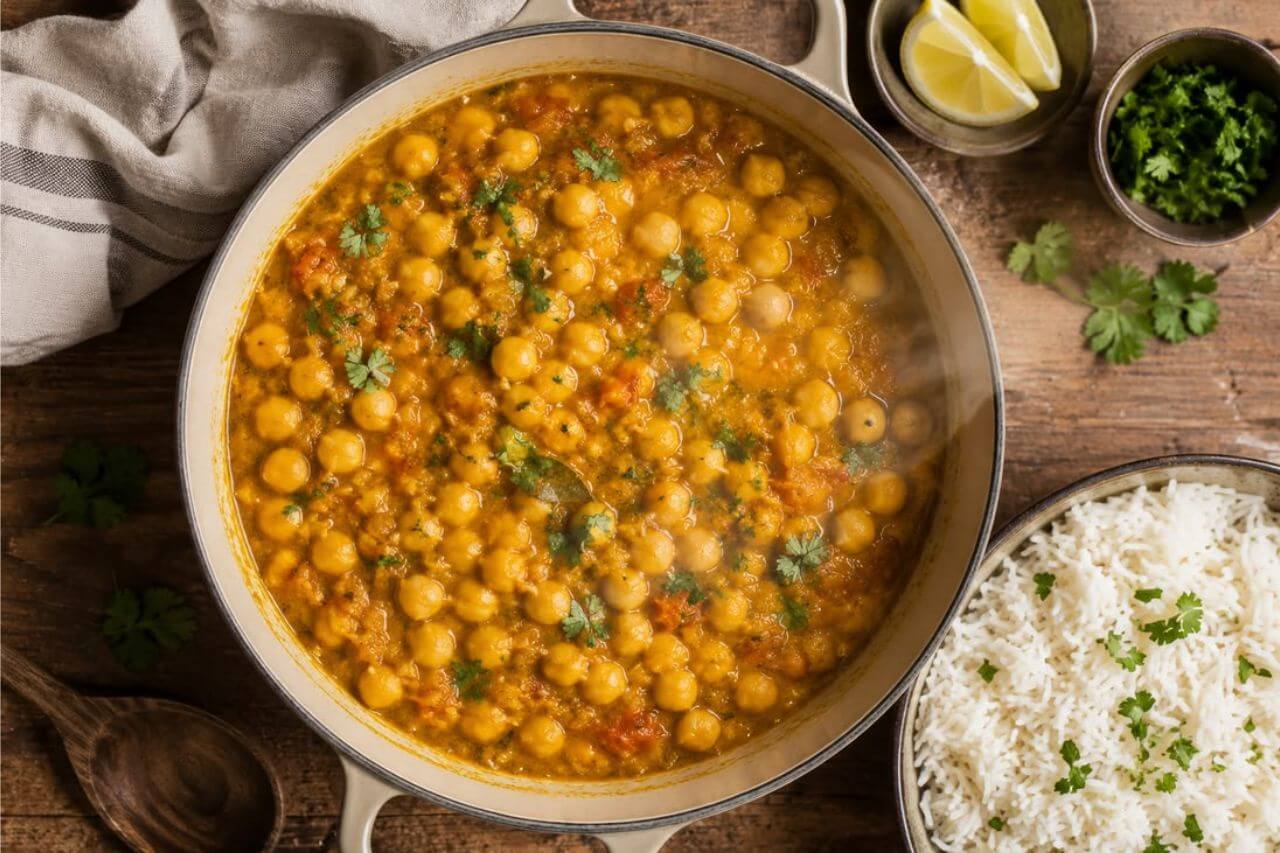
Vegan Chickpea Curry is a hearty, flavorful one-pot meal made with chickpeas, tomatoes, onions, garlic, ginger, and warm spices. It is naturally plant-based, filling, and easy to make with everyday ingredients.
The chickpeas simmer in a rich tomato-based curry until they absorb the spices and become tender and flavorful. Serve it with basmati rice, naan, or warm flatbread for a satisfying weeknight dinner.
Recipe at a Glance
- Prep Time: 10 minutes
- Cook Time: 30 minutes
- Total Time: 40 minutes
- Servings: 4
- Course: Main Course
- Cuisine: Indian-inspired
- Main Ingredients: Chickpeas, tomatoes, onion, garlic, ginger, spices
Ingredients
- 2 cans (15 oz each) chickpeas, drained and rinsed
- 2 tablespoons vegetable oil
- 1 medium onion, finely chopped
- 3 cloves garlic, minced
- 1 tablespoon fresh ginger, grated
- 1 can (14 oz) diced tomatoes
- 1 tablespoon tomato paste
- 1 teaspoon ground cumin
- 1 teaspoon ground coriander
- 1 teaspoon garam masala
- ½ teaspoon turmeric
- ½ teaspoon chili powder
- ½ teaspoon salt, or to taste
- ½ teaspoon black pepper
- 1 cup vegetable broth or water
- ½ cup coconut milk
- 1 tablespoon fresh lemon juice
- Fresh cilantro, for garnish
Step-by-Step Cooking Method
1. Prepare the Chickpeas
Drain and rinse the chickpeas under cool running water. Set them aside while you prepare the curry base.
Rinsing removes excess liquid from canned chickpeas and gives the curry a cleaner flavor.
2. Cook the Onion
Heat the oil in a large skillet or saucepan over medium heat. Add the chopped onion and cook for about 5–7 minutes, stirring occasionally, until softened and lightly golden.
This gives the curry base a naturally sweet, savory flavor.
3. Add Garlic and Ginger
Stir in the garlic and fresh ginger. Cook for about 30–60 seconds, just until fragrant.
Keep the heat moderate so the garlic does not burn.
4. Toast the Spices
Add the cumin, coriander, garam masala, turmeric, and chili powder.
Stir continuously for about 30 seconds. The spices should become fragrant and coat the onions without darkening too much.
5. Build the Tomato Base
Add the tomato paste and diced tomatoes. Stir well and cook for 3–4 minutes, allowing the tomatoes to soften and the mixture to become slightly thicker.
6. Add the Chickpeas
Stir the chickpeas into the tomato mixture, then pour in the vegetable broth or water.
Bring the curry to a gentle simmer.
7. Simmer the Curry
Reduce the heat to medium-low and simmer uncovered for about 15 minutes, stirring occasionally.
The sauce should gradually thicken and coat the chickpeas. For a thicker curry, gently mash a small portion of the chickpeas against the side of the pan and stir them back into the sauce.
8. Add Coconut Milk
Stir in the coconut milk and simmer for another 3–5 minutes.
The curry should look creamy while still having enough sauce to serve comfortably with rice or bread.
9. Finish With Lemon
Remove the curry from the heat and stir in the fresh lemon juice.
Taste and adjust the salt or chili if needed.
10. Garnish and Serve
Transfer the curry to serving bowls and garnish with fresh cilantro.
Serve hot with basmati rice, naan, roti, or another warm flatbread.


Complete Vegan Chickpea Curry Recipe
Ingredients: Chickpeas, vegetable oil, onion, garlic, ginger, diced tomatoes, tomato paste, cumin, coriander, garam masala, turmeric, chili powder, salt, black pepper, vegetable broth, coconut milk, lemon juice, and fresh cilantro.
Method: Sauté the onion until softened and lightly golden. Add garlic and ginger, followed by the spices and tomato paste. Stir in diced tomatoes and cook until the base thickens slightly. Add chickpeas and vegetable broth, then simmer for about 15 minutes. Stir in coconut milk and cook for another few minutes. Finish with lemon juice, garnish with cilantro, and serve hot.
Why You’ll Love This Chickpea Curry
- Naturally vegan: No meat, dairy, or eggs are needed.
- Filling and satisfying: Chickpeas provide a hearty texture and make the curry substantial.
- One-pot meal: Everything cooks in one pan for easier cleanup.
- Full of flavor: Aromatic spices, tomatoes, ginger, and garlic create a rich curry base.
- Weeknight-friendly: It uses simple ingredients and takes about 40 minutes from start to finish.
What Makes a Good Chickpea Curry?
The curry base is where most of the flavor develops. Cooking the onions until softened and lightly golden gives the sauce more depth, while briefly cooking the spices with the aromatics helps release their flavor.
Allowing the chickpeas to simmer in the tomato sauce is also important. This gives them time to absorb the seasoning instead of simply being coated in sauce.
How to Make Vegan Chickpea Curry Creamy
Coconut milk gives this curry a naturally creamy texture while keeping it dairy-free. For a thicker curry, simmer it uncovered for a few extra minutes.
You can also mash some of the chickpeas directly in the pan. Their starch naturally thickens the sauce without requiring flour or cornstarch.
Can I Use Dried Chickpeas?
Yes. Dried chickpeas can be used instead of canned chickpeas, but they need to be soaked and fully cooked before being added to the curry.
If using cooked dried chickpeas, use roughly the same amount as the canned chickpeas in this recipe.
Easy Variations
Spinach Chickpea Curry
Stir in a few handfuls of fresh spinach during the final few minutes of cooking. Let it wilt into the sauce before serving.
Potato Chickpea Curry
Add diced potatoes after the tomato base is prepared. Simmer until the potatoes are fork-tender.
Spicy Chickpea Curry
Increase the chili powder or add fresh chopped chili peppers for extra heat.
Chickpea and Vegetable Curry
Add vegetables such as bell peppers, carrots, cauliflower, or peas for a more substantial vegetable curry.
Coconut Chickpea Curry
Increase the coconut milk slightly for a richer, creamier sauce with a more noticeable coconut flavor.
What to Serve With Vegan Chickpea Curry
This curry pairs well with both rice and bread. Try serving it with:
- Basmati rice
- Brown rice
- Naan
- Roti
- Chapati
- Warm flatbread
- Quinoa
Fresh cilantro and a squeeze of lemon brighten the finished dish, while a simple cucumber salad can add a cool contrast to the warm spices.
Can You Make Chickpea Curry Ahead of Time?
Yes. Chickpea curry is excellent for meal preparation because the flavors often become deeper after resting.
Allow the curry to cool, then refrigerate it in an airtight container. Reheat gently on the stovetop or in the microwave, adding a splash of water or vegetable broth if the sauce has thickened too much.
Storage and Reheating
Store leftover curry in an airtight container in the refrigerator for up to 3–4 days.
For longer storage, freeze cooled curry in suitable freezer-safe containers. Thaw it in the refrigerator before reheating and stir well as it warms.
Frequently Asked Questions
Is chickpea curry vegan?
Yes. This recipe uses plant-based ingredients including chickpeas, vegetables, spices, vegetable broth, and coconut milk.
How do you make vegan chickpea curry?
Cook onion, garlic, and ginger, then add the spices and tomato base. Stir in chickpeas and broth and simmer until flavorful and thick. Finish with coconut milk and lemon juice.
Can I make chickpea curry without coconut milk?
Yes. Simply leave it out and use a little extra vegetable broth if necessary. The curry will have a lighter, tomato-based texture.
How can I make chickpea curry thicker?
Simmer the curry uncovered to reduce the liquid, or mash some of the chickpeas into the sauce.
Can I make this curry spicy?
Yes. Add more chili powder or fresh chili according to your preferred heat level.
What type of chickpeas should I use?
Canned chickpeas are convenient and work very well. Choose chickpeas that are firm but tender after rinsing.
Final Thoughts
This Vegan Chickpea Curry is a simple, hearty meal that brings together tender chickpeas, aromatic spices, tomatoes, ginger, garlic, and creamy coconut milk. It is easy enough for a weeknight dinner but flavorful enough to make again and again.
Serve it over basmati rice or alongside warm naan, finish with fresh cilantro and lemon, and you have a satisfying plant-based meal made in one pot.
Related Posts
Stay Informed With the Latest & Most Important News
Previous Post
Next Post




Advertisement
